
🏠 Trusted Local Roofers
Chimney Rebuilding Nottingham
A leaning stack, crumbling mortar, or bricks landing on the patio all mean one thing — repointing won't fix it anymore. This page covers when a full rebuild is the right call, what it costs, and how we build a stack that outlasts the original. Our chimney services in Nottingham cover everything from one loose brick to a full rebuild.
- Fully Insured
- 10-Year Guarantee
- 5-Star Rated
Quick Free Estimate - No Obligation
We're not just roofers – we're your neighbours.
Fully Insured • Response within 15 mins
🔒 Your details are safe with us. No spam, ever.
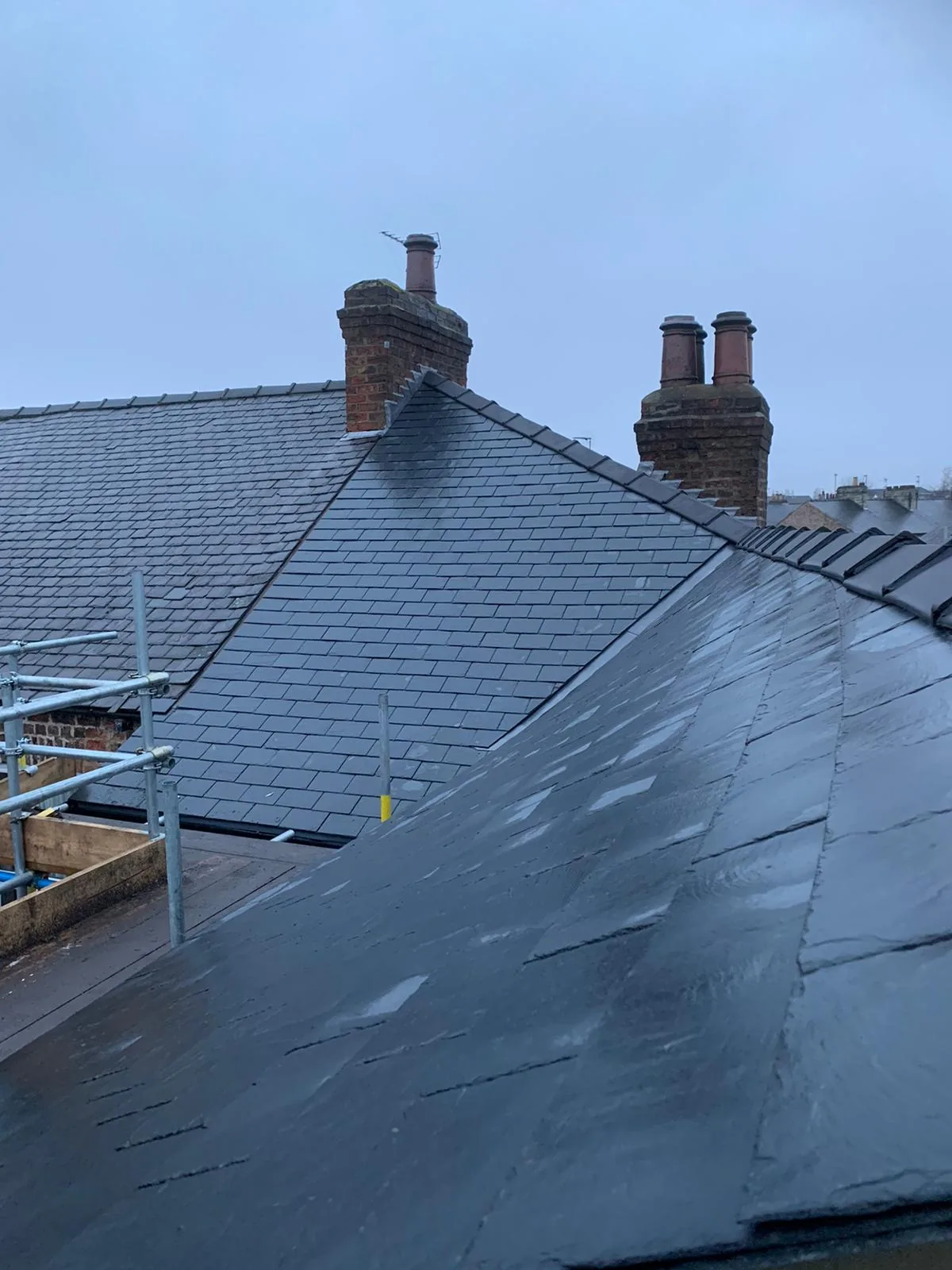
Repoint, Repair, or Rebuild? How to Tell Which One Your Chimney Needs
Most chimneys need one of three things: repointing (renewing the mortar between the bricks), a partial repair to one damaged section, or a full rebuild. You need a rebuild when the bricks themselves are cracked, spalled (flaking apart from frost damage), or loose, or when the whole stack leans. Repointing only works if the brick underneath is still sound — it can't fix damaged brick or straighten a leaning structure. If your stack has been patched more than once already, in mismatched materials, it's usually cheaper long-term to rebuild than keep patching.
Look out for these warning signs on a walk round your property or from photos taken during a survey:
- A visible lean in the stack, especially when viewed against a straight edge like a nearby drainpipe
- Cracked, crumbling, or flaking bricks, particularly on the weather-facing side
- Mortar joints eroded more than about 15mm deep, or missing entirely in places
- Bits of brick or mortar found in the guttering or on the ground after windy weather
- Daylight visible through the stack from inside the loft
- A chimney that's already been repaired two or three times in different materials
- Damp staining on a chimney breast wall inside the house, especially near the top floor
If your chimney is leaning, there's a recognised safety limit. The BRE's own guidance treats a lean of more than roughly 1mm out of true for every 100mm of height as unsafe and in need of rebuilding, not just monitoring. If you're only dealing with an isolated cracked section rather than the whole stack, our chimney stack repair service may be enough — we'll tell you honestly which category your chimney falls into during survey.
Repointing vs Partial Rebuild vs Full Rebuild: What Each Option Actually Involves
The three options aren't just different price points — each one involves a different amount of work and disruption. Here's what actually happens with each.
Repointing
- Old, crumbling mortar is raked out to a set depth, then packed with fresh mortar
- The existing bricks stay exactly where they are — nothing is taken down
- Usually finished in a single day for a standard stack
- Only suitable when the brick itself is sound
Partial Rebuild
- The stack is taken down from roofline level upward, brick by brick, and rebuilt
- Suits a leaning stack or brickwork that's damaged above the roof but sound below it
- Takes roughly 2 to 4 days on site, weather allowing
- Original flashing, flaunching (the mortar collar around the pots), and pots are usually renewed as part of the job
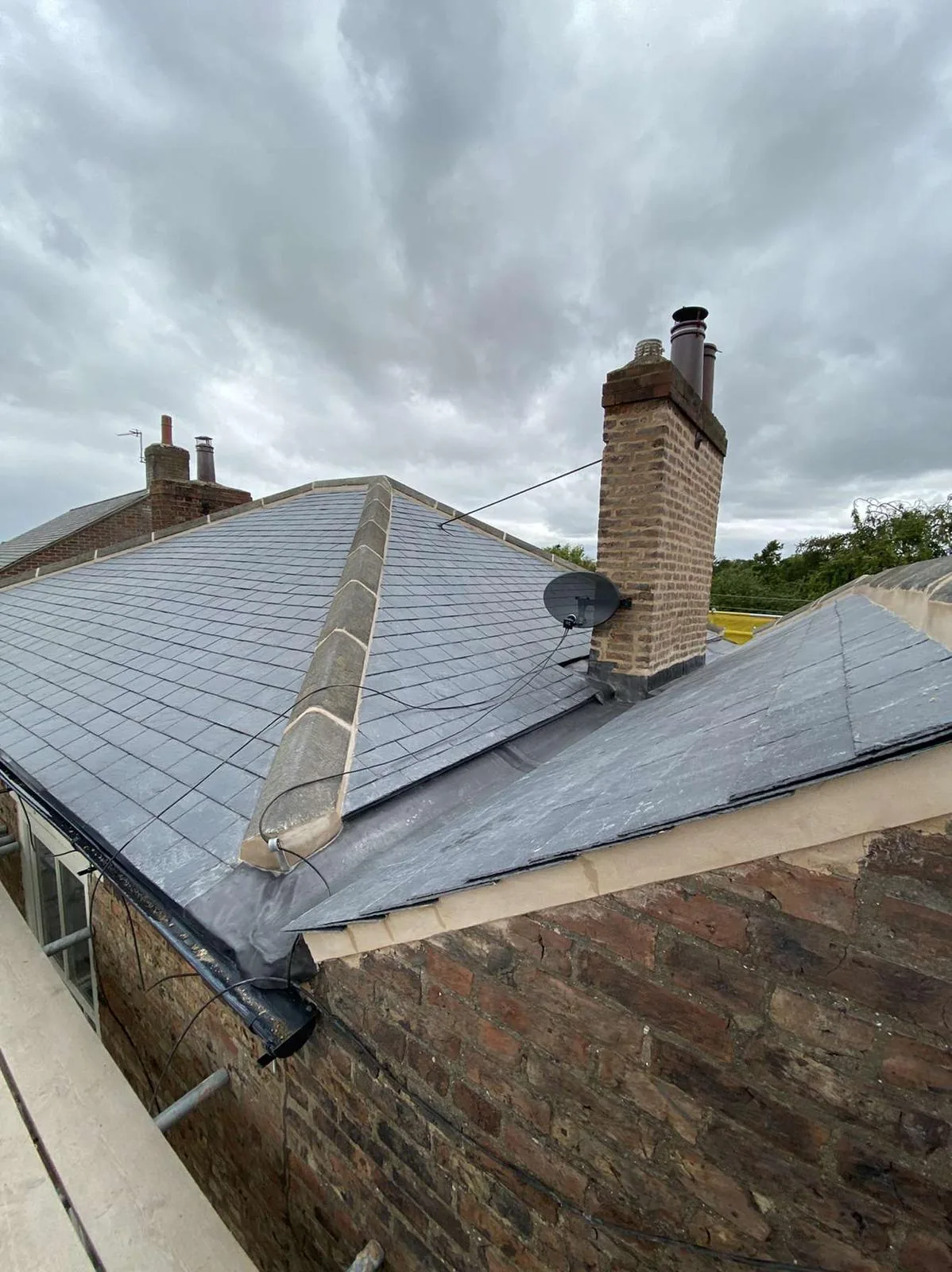
Full Rebuild
- The stack comes down further, sometimes into the roof void, and is rebuilt from a sound base upward
- Needed where damage runs deep, or a chimney has had several incompatible repairs over the years
- Takes roughly 5 to 14 days depending on scale and access
- Gives the chance to correct old faults — a poorly sized flue, missing damp proof course, or a badly built base — properly, once
If your chimney is disused entirely and causing ongoing problems rather than being kept for character, full removal down to roof level might suit you better than rebuilding it. See our chimney removal page for that option.
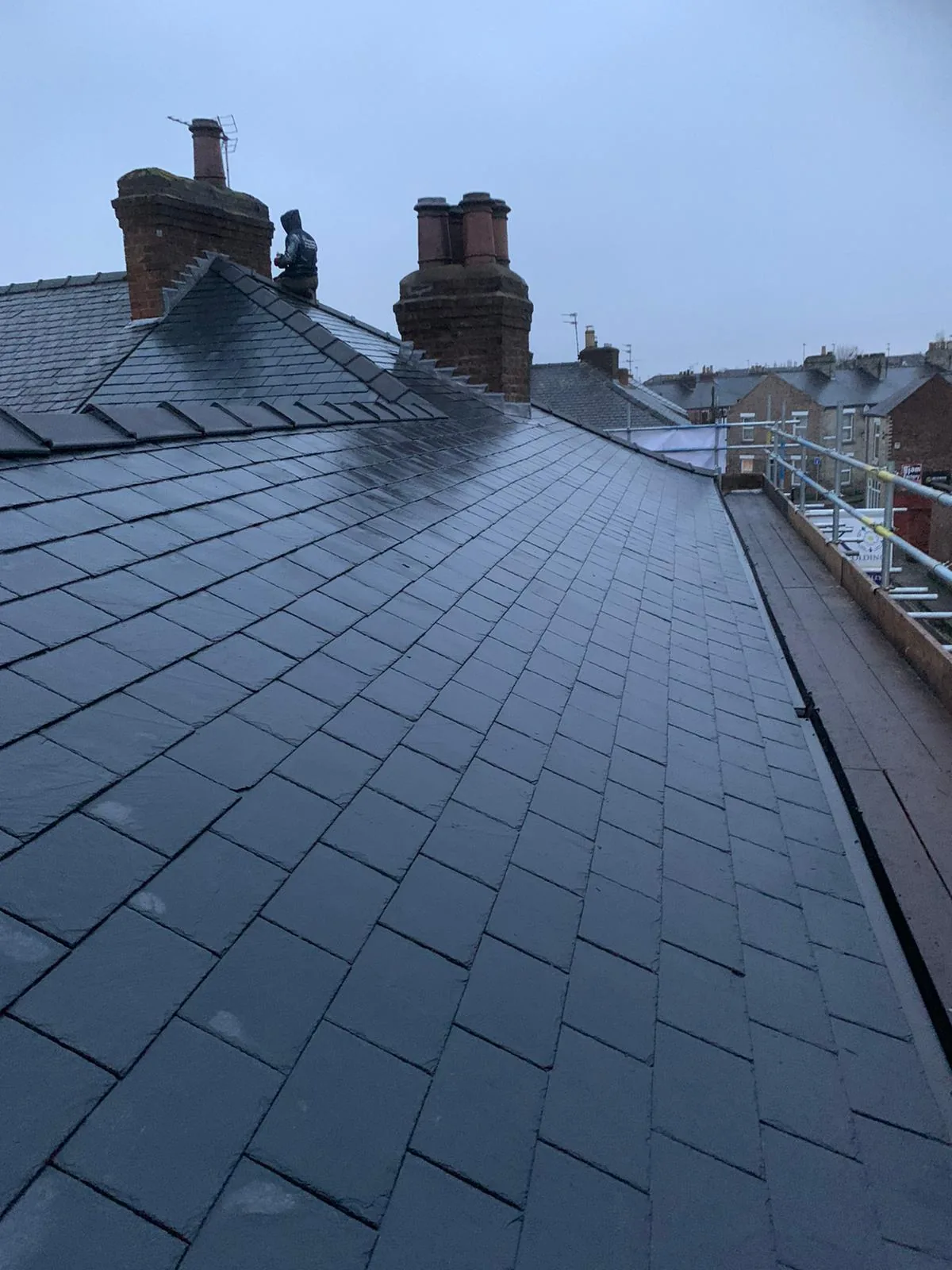
What Happens Before We Touch Your Chimney
A rebuild starts with finding out exactly what's wrong, not guessing from the ground.
- We carry out a free drone survey of the stack, flashings, and roof junctions first — this scopes most jobs without anyone going up a ladder at all
- You get clear photos showing the exact extent of the damage, brick by brick
- We tell you honestly whether repointing, a partial rebuild, or a full rebuild is what you actually need
- We check whether planning permission or listed building consent applies — conservation areas around The Park and parts of Lenton often need extra sign-off, and any listed building always needs consent for chimney work
- On a semi-detached or terrace, we check whether the stack is shared with next door, since a party wall stack sometimes needs the neighbour informed before work starts
- We confirm whether scaffolding is needed for safe access, or whether a tower will do for a smaller job
- You get a firm quote and an agreed scope before any brick comes down
How We Rebuild a Chimney Stack That Lasts Generations
Most short-lived chimney rebuilds fail because of rushed foundations or the wrong mortar mix, not bad luck. Here's how we do it properly.
- Take the stack down carefully, salvaging original bricks and pots wherever they're sound enough to reuse
- Check and repair the base the stack sits on — a rebuild on a poor base fails again within a few years
- Source matching brick and mortar colour, so the rebuilt section doesn't stand out against the rest of the house — a real concern on the Victorian and Edwardian terraces common around Sherwood and Mapperley
- Rebuild course by course, checking plumb (true vertical) constantly rather than only at the end
- Fit a new damp proof course (a waterproof layer that stops moisture rising into the stack) at roofline if the original is missing or failed
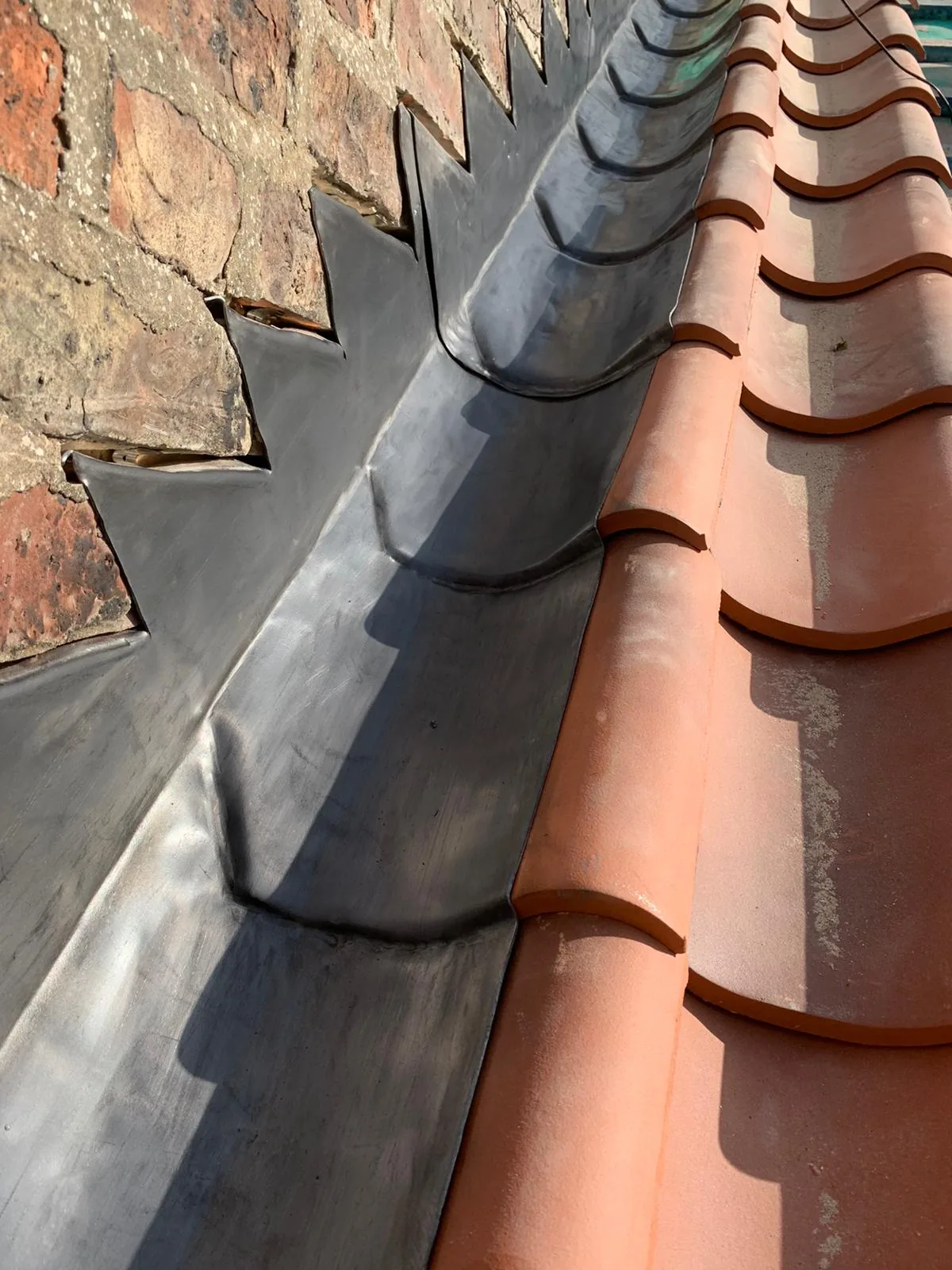
- Renew lead flashing and flaunching around the base of the pots to keep water out of the new joints
- Refit the original flue liner and chimney pot where they're still sound, or fit new ones where they've reached the end of their life — we'll tell you which applies during survey, not after the stack is already down
- Clear the site and leave scaffolding in place only as long as it's needed
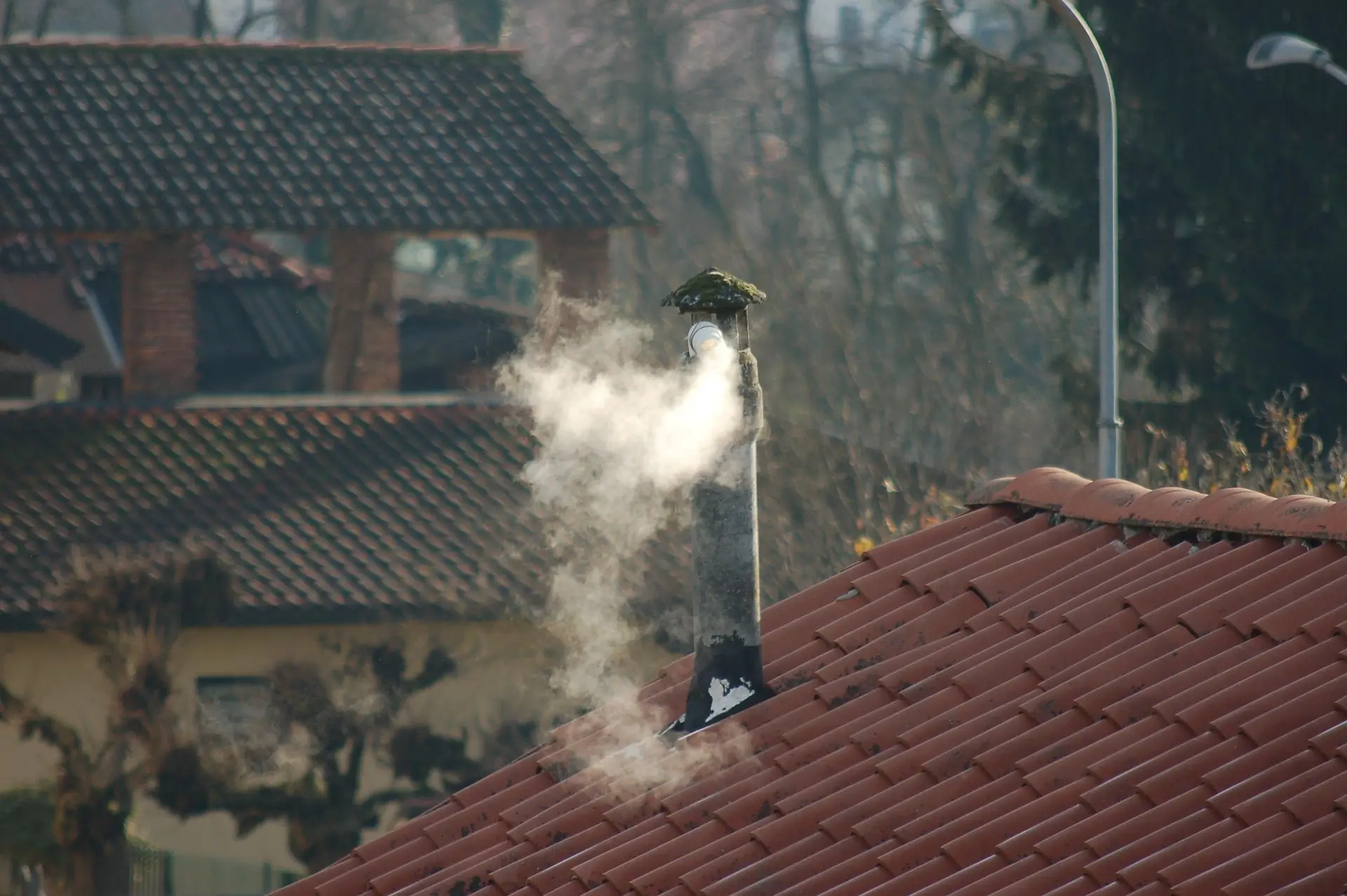
On period and heritage properties, we favour lime mortar over modern cement mixes wherever the original build used it. Cement mortar is harder than old soft brick, so it forces the brick itself to crack under movement instead of the joint flexing — exactly the failure pattern the Society for the Protection of Ancient Buildings' chimney guidance warns against. Getting this detail right the first time is why we're careful about matching materials to the age of the property, not just the cheapest mix available.
How to Check Your New Chimney Stack Was Built Properly
Once the job's finished, a few simple checks tell you whether it's been done right.
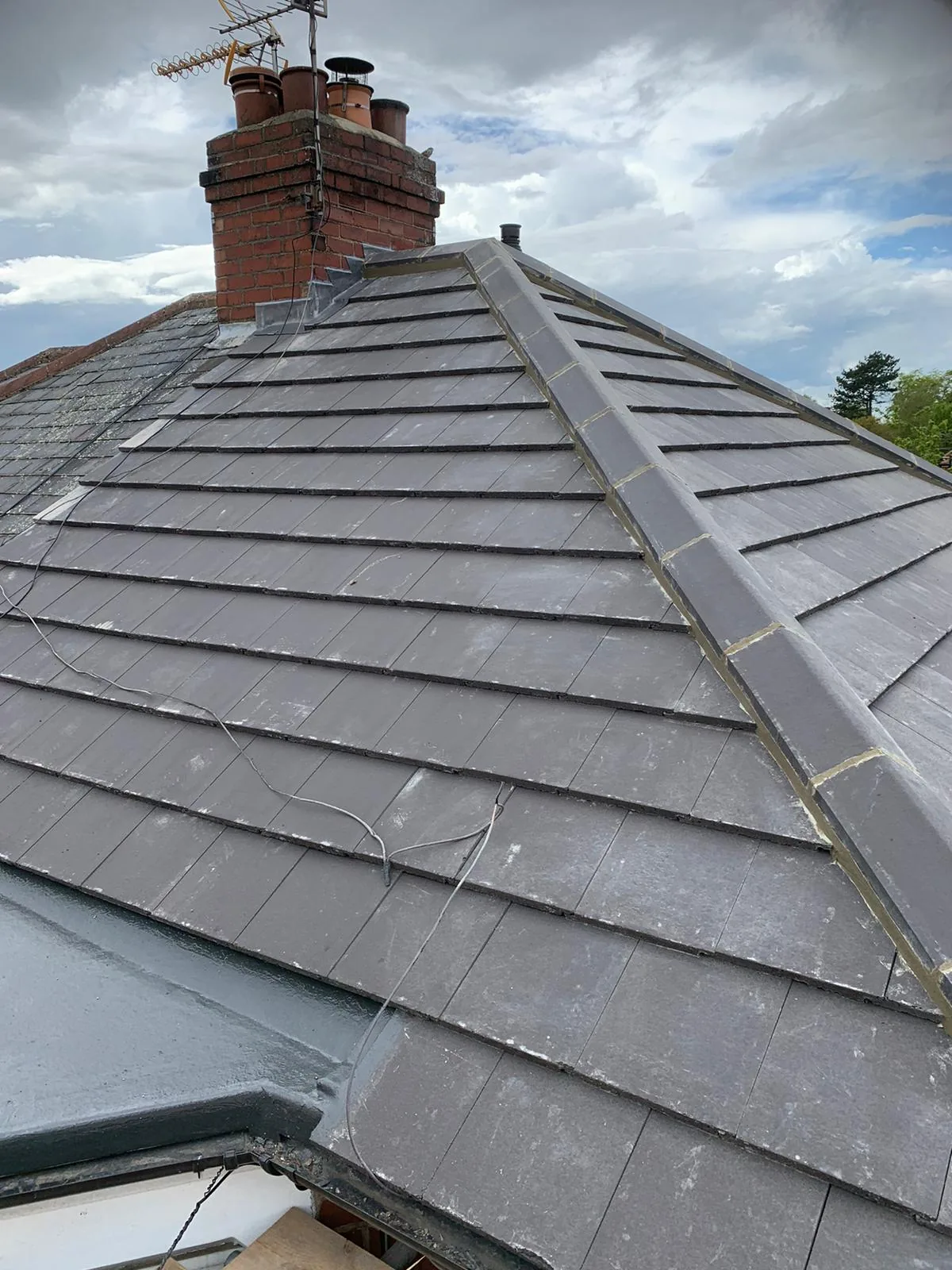
- The stack should stand dead plumb — check it against a nearby vertical line, like a drainpipe or window edge
- Mortar joints should be a consistent width and colour all the way up, not patchy or uneven
- The brick colour and bond pattern should match the surrounding property closely, not look like an obvious repair
- Flaunching around the pots should be smooth, fully sealed, and free of hairline cracks
- Lead flashing should sit neatly into the brickwork with no visible gaps at the joints
- Ask to see photos of the base and foundation before it was rebuilt on — a reputable roofer takes these as standard proof of what was underneath
- You should get written confirmation of your guarantee, the materials used, and any Building Regulations notification the job needed
We back every chimney rebuild with a 10-year workmanship guarantee, in writing, from the day the job finishes.
Keeping Your Rebuilt Chimney Sound for Decades
A rebuilt chimney needs very little upkeep, but a bit of regular attention keeps it that way.
- Get the stack looked at every couple of years, or after any major storm
- Have the flue swept at the frequency your appliance needs — anywhere from quarterly for a wood burner to annually for most open fires
- Watch for the same early signs that caused the original problem: hairline mortar cracks, a loose pot, or damp staining reappearing in the loft
- Keep gutters and roof valleys near the base of the stack clear, since trapped debris holds moisture against fresh brickwork
- Avoid cement-based repairs on lime-mortared heritage stacks, even for small touch-ups, as mixing the two causes the cracking problem to come straight back
Cost & Pricing Guidance
Chimney rebuild pricing across the UK for 2025/26 typically runs like this:
- Repointing only: £200-£1,200
- Minor rebuild, a few courses above roofline: £800-£1,500
- Partial rebuild, from roofline upward: £1,500-£3,500
- Full rebuild, severe or long-neglected stacks: £2,000-£10,000+
Scaffolding typically adds 15-35% to the total cost on a straightforward semi-detached or terraced house, more if access is tight or the property is taller than average. Location matters too — properties in and around Nottingham generally price below London and the South East, where similar jobs run 15-25% higher.
What pushes the price up or down: the height and number of pots on the stack, whether scaffolding or a tower will do, how much of the original brick can be salvaged, and whether planning or listed building consent adds time to the programme.
These are general ranges, not a quote. A fixed price needs a survey.
Comparison Table: Chimney Repair Options
| Option | Scope of Work | Time on Site | Best For | Relative Cost |
|---|---|---|---|---|
| Repointing | Mortar joints renewed, bricks left in place | 1 day | Sound brick, failing mortar only | £ (lowest) |
| Partial Rebuild | Rebuilt from roofline upward | 2-4 days | Leaning stack, damage above the roof | ££ |
| Full Rebuild | Rebuilt from a sound base, sometimes into the roof void | 5-14 days | Severe damage, multiple past repairs | £££ |
| Chimney Removal | Stack taken down to below roofline or entirely | 1-3 days | Disused stacks causing ongoing problems | ££ (varies) |
Why Choose Tate & Sons for Your Chimney Rebuild
Chimney rebuilds are led by James Tate, Founder and Managing Director, who still prices most jobs himself. James set Tate & Sons up on a simple idea: find out what's genuinely wrong, use the right materials, and leave something that holds for years, not months. He's happiest up a ladder on a tricky period property, working out how to rebuild a stack properly without losing the character of the house underneath it — exactly the job a chimney rebuild usually is. Read more on our About page.
Our roofers are directly employed, not subcontracted. They hold NVQ Level 2 and 3 qualifications in Roofing Occupations and carry CSCS cards. Every chimney rebuild starts with a free drone survey and finishes with a 10-year workmanship guarantee.
Chimney Rebuilding Across Nottingham and the Wider County: Areas We Serve
We rebuild chimney stacks right across Greater Nottingham and out into the wider county, on everything from Victorian terraces to modern semis.
- Nottingham City Centre (NG1)
- The Park (NG1)
- West Bridgford (NG2)
- Sneinton (NG2)
- Wollaton (NG8)
- Lenton (NG7)
- Beeston (NG9)
- Chilwell (NG9)
- Stapleford (NG9)
- Arnold (NG5)
- Sherwood (NG5)
- Mapperley (NG3)
- Carlton (NG4)
- Gedling (NG4)
- Hucknall (NG15)
- Long Eaton (NG10)
- Mansfield (NG18)
- Sutton-in-Ashfield (NG17)
Got Questions?
Your Flat Roofing Questions, Answered Properly
How much does a chimney rebuild cost in Nottingham?
Most Nottingham chimney rebuilds cost between £800 and £3,500, depending on whether it's a partial rebuild from roofline up or a full rebuild from a sound base. Severe cases with deep structural damage or several past repairs to undo can run £2,000-£10,000 or more. Scaffolding typically adds 15-35% to the total. A survey gives you an exact figure rather than a general range.
How do I know if my chimney needs a full rebuild instead of repointing?
Repointing only works if the brick itself is still sound and just the mortar has failed. You need a rebuild once the bricks are cracked, spalled, or loose, or the stack visibly leans. A chimney that's already been patched more than once in mismatched materials is usually a rebuild candidate too, since repeated repointing on damaged brick rarely holds for long. Our free drone survey tells you honestly which category yours falls into.
How long does a chimney rebuild take?
A partial rebuild from roofline upward typically takes 2 to 4 days. A full rebuild, especially one that goes down into the roof void or corrects old faults underneath, usually takes 5 to 14 days. Weather plays a part too, since brick and mortar need dry conditions to cure properly. We'll give you a realistic timeline once we've scoped the job at survey stage.
Do I need planning permission or listed building consent to rebuild my chimney?
Most straightforward rebuilds that keep the same height, position, and appearance don't need planning permission. Conservation areas, including parts of The Park and Lenton, can remove permitted development rights and require an application even for a like-for-like rebuild. Listed buildings always need listed building consent for chimney work, whatever the scale. We check this during survey and flag anything that applies before work starts.
Will my rebuilt chimney match my existing brickwork?
Yes, matching brick and mortar colour is standard practice on every rebuild we carry out. We source brick that matches the age and tone of the property as closely as possible, which matters most on Victorian and Edwardian terraces where an obvious repair patch stands out badly. Original bricks that are still sound get reused within the rebuild wherever possible, which helps the blend further. We'll show you samples before ordering on any job where matching is a concern.
How long does a rebuilt chimney stack last?
A properly rebuilt brick chimney can last 50 to 100 years with only routine maintenance. The mortar mix matters as much as the brick — cement mortar on an older lime-built house causes cracking that shortens the stack's life, while the right mix for the property's age lets it move naturally without damage. Regular sweeping and an occasional visual check are usually all it needs after that.
What's the safe lean limit before a chimney needs rebuilding rather than just watching?
Industry guidance treats a lean of more than roughly 1mm out of true for every 100mm of height as unsafe. Beyond that point, the stack is considered a structural risk rather than something to simply monitor over time. Repointing can't correct a lean, since it only renews the mortar and doesn't reset the brickwork's position. If you notice a visible lean, get it checked promptly rather than waiting for the next inspection.
My chimney is shared with next door on a semi-detached house — can just my side be rebuilt?
Often yes, but it depends on how the stack was originally built and whether it sits on the party wall. Where the stack is genuinely shared structure, your neighbour may need to be informed or involved under party wall rules before work starts, even if you're only rebuilding your own flue. We check this at survey stage on any semi-detached or terraced property, so there are no surprises once scaffolding goes up.
Book Your Free Drone Roof Survey Today
See exactly what your roof needs before any work starts. No ladders, no pressure — just a clear picture from a local Nottingham team.
A tired roof only gets worse as water works deeper into the deck and timber beneath it. A quick, free drone survey today tells you exactly where you stand — and often the fix is smaller and cheaper than you feared. Book now, get an honest quote, and protect your home before the next East Midlands downpour finds the weak spot.
📍 57 Cyril Avenue, Nottingham, NG8 5BA
📞 0115 647 4455
Call the Nottingham team today on 0115 647 4455, or request your free drone survey online. We’re already working across your area.
Get in Touch
Tate & Sons Roofing — Nottingham
57 Cyril Avenue, Nottingham, NG8 5BA
📞 0115 647 4455
✉️ [email protected]