
🏠 Melton Mowbray Clay Roof Tiling Specialists
Clay Roof Tiling in Melton Mowbray — Traditional Character, Built to Last for Generations
- Free Drone Survey
- Directly Employed Roofers
- 10-Year Guarantee
📞 Call 01664 490955 — free drone survey & a written price
Book Your Free Drone Survey
No scaffold. No pressure. No obligation.
Straight answers from local Melton Mowbray roofers.
🔒 Your details are safe with us. No spam, ever.
Walk the streets around St Mary's Church and you will see why clay tile still matters here. Melton Mowbray's Georgian and Victorian homes were built with it, and a roof that strays from that warm, traditional tone stands out for the wrong reasons. Clay roof tiling in Melton Mowbray keeps a period property looking the way it should, while giving you a covering that can outlast the people who fit it. Tate & Sons Roofing fits and repairs clay tiled roofs across the town and the wider borough, working as a roofing contractor across Melton Mowbray on everything from a single re-bed to a full re-roof.
This page covers when clay tile is the right call, which profile suits your home, the planning rules that actually apply, and what a fair price looks like. Start with a free drone roof survey and a written quote before anything is agreed. No scaffold just to take a look, and no charge either way.
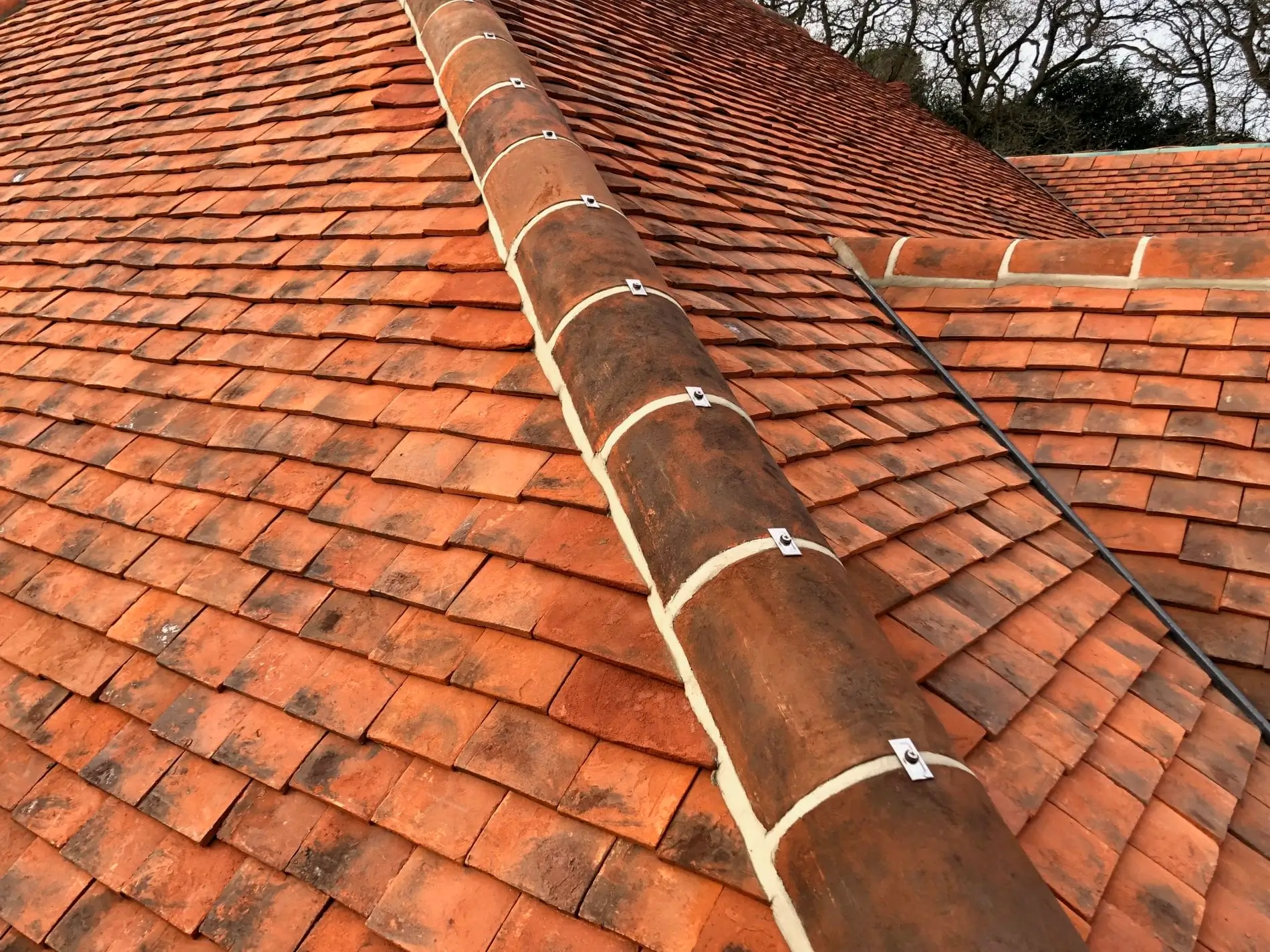
Know the Signs Your Clay Tiled Roof Needs More Than a Patch
Clay tile ages well, but it does not age forever. A tile that has done sixty or more years of work will start to show it, usually in small ways at first.
Watch for these signs:
- Tiles that have cracked, slipped, or gone missing after wind
- Flaking or crumbling tile edges, known as spalling
- Heavy moss or lichen holding damp against the tile surface
- Daylight showing through the roof timbers from inside the loft
- Ceiling stains that spread further after every heavy downpour
- A colour mismatch across patch repairs done over the years
A single cracked tile is a quick fix. Widespread spalling, sagging battens, or a roof covered in patchwork repairs points toward a proper re-roof instead. We see this often on the large traditional family homes around Long Clawson, where a farmhouse roof gets one more repair every year rather than dealt with properly. A free drone survey settles the question with real footage, not a guess from the pavement.
Plain Tile, Pantile or Interlocking Clay — Which Suits Your Melton Home
Not all clay roof tiling looks or performs the same way. The right profile depends on your property's age, its roofline, and how closely it needs to match its neighbours.
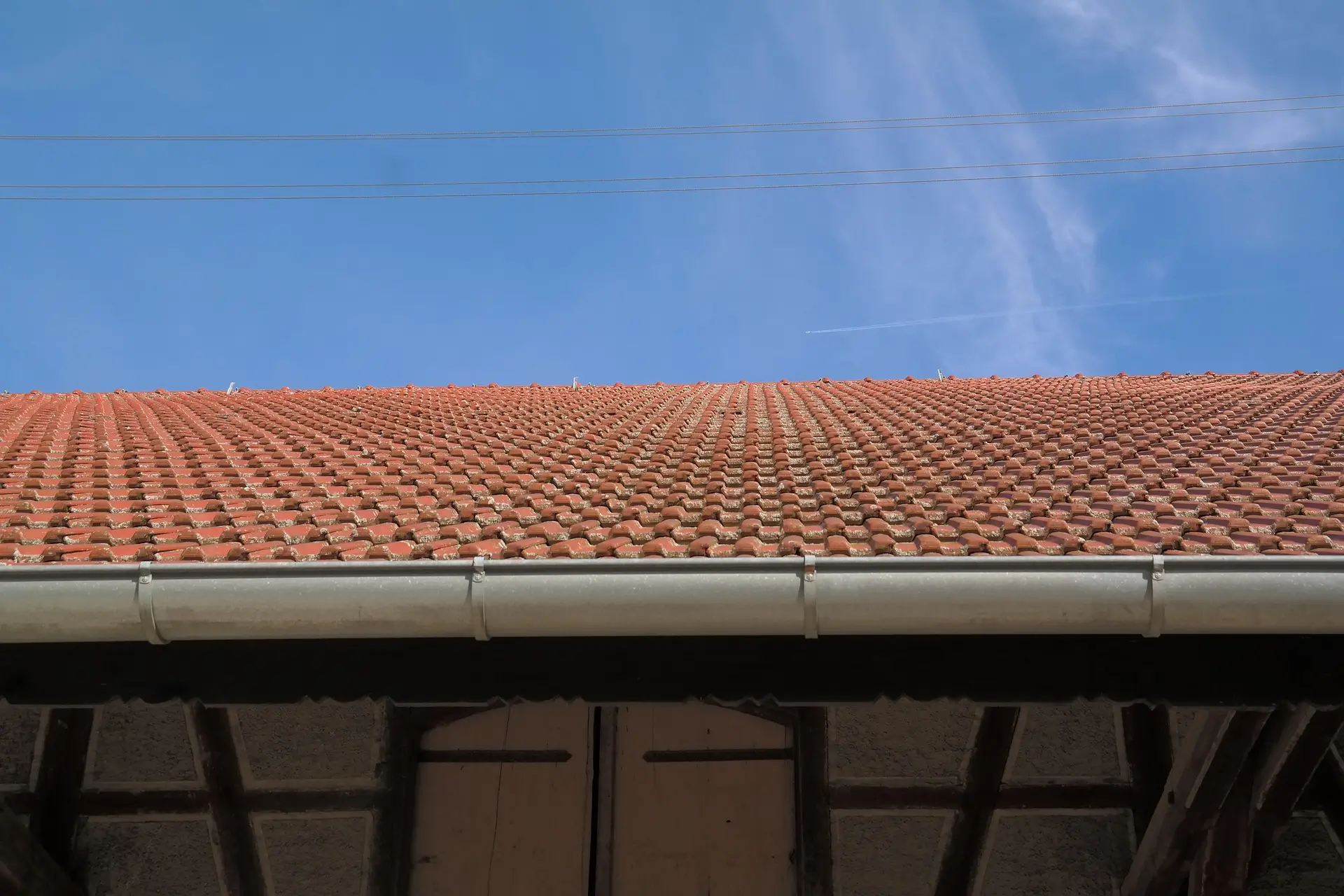
Plain clay tiles are small, flat, and laid double-lapped for a fine, traditional texture. They suit period cottages and listed buildings where the detail matters most. Pantiles are the large S-shaped tiles you see across Melton Mowbray, laid in a rolling pattern that sheds water fast and covers more roof per tile. Interlocking clay tiles bring that same warm clay tone at a lower cost, since side locks mean fewer tiles and a faster fit, without losing the traditional look from the ground.
| Profile | Typical cost (per m², installed) | Typical lifespan | Best for |
|---|---|---|---|
| Plain clay tile | £130–£220 | 60–100+ years | Listed buildings, cottages, fine period detail |
| Clay pantile | £90–£150 | 60–80 years | Traditional character homes, most Melton streets |
| Interlocking clay tile | £70–£120 | 50–70 years | Larger roofs wanting the clay look for less |
Waltham on the Wolds sits in a conservation area with a strong run of traditional limestone, slate and clay properties, where the local authority looks closely at profile and colour. Down in Frisby on the Wreake, the character-filled detached homes tend to carry the higher-value plain tile or handmade clay well, since the extra cost blends into a property already built to a high standard.
Planning Permission and Conservation Area Rules for Clay Roof Tiling
Most straightforward, like-for-like clay roof tiling does not need planning permission. Re-covering a roof with the same profile and a similar colour is usually treated as maintenance, not development.
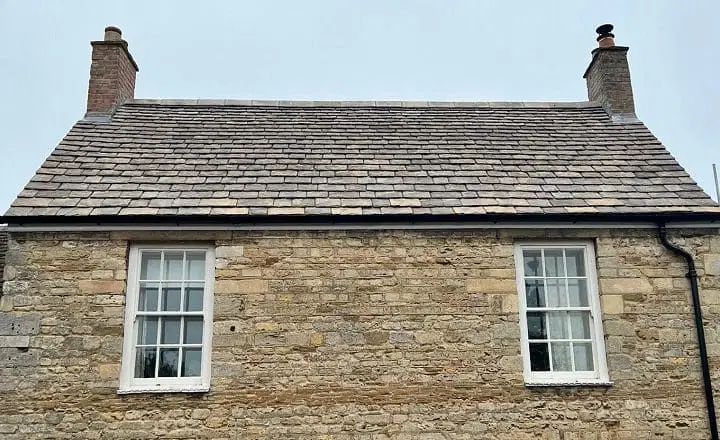
Listed buildings and conservation areas change that. If your home is listed, or sits within a conservation area, you will usually need Listed Building Consent or planning approval before the old tiles come off, and the council will expect a genuine like-for-like clay match. Melton Mowbray's older streets around St Mary's Church and the town centre fall within areas where the planning authority checks visible roofing changes closely, and Old Dalby carries similar protections on some of its older cottages. We check a property's listed and conservation status before quoting, so a job never stalls part-way through waiting on paperwork that should have been sorted first.
Where a genuinely heritage-sensitive roof is involved, our heritage and listed building roofing service covers the extra care that conservation officers expect, from tile sourcing to lime mortar detailing. Building Regulations still apply on top of any planning consent, covering weather resistance, structural strength and ventilation, and we handle that sign-off as standard.
What Clay Roof Tiling Costs in Melton Mowbray
Clay costs more than concrete tile upfront, and that is the trade-off for a roof that can outlast two or three concrete re-roofs over the same period. As a general guide, machine-made clay pantile or interlocking tile installed runs £70–£150 per m², while plain clay tile laid double-lapped runs £130–£220 per m² because of the extra labour involved.
On a typical semi-detached roof of around 80–100m², that works out to roughly £7,000–£13,000 for pantile or interlocking clay, and £12,000–£20,000 for plain tile. Handmade or reclaimed clay tile on a listed property, where every tile is matched by hand, can run £20,000–£35,000 or more on a larger roof.
What pushes a price up or down:
- Tile profile — plain tile costs more to lay than pantile or interlocking clay
- Handmade vs machine-made — handmade tiles for listed work cost far more than standard stock
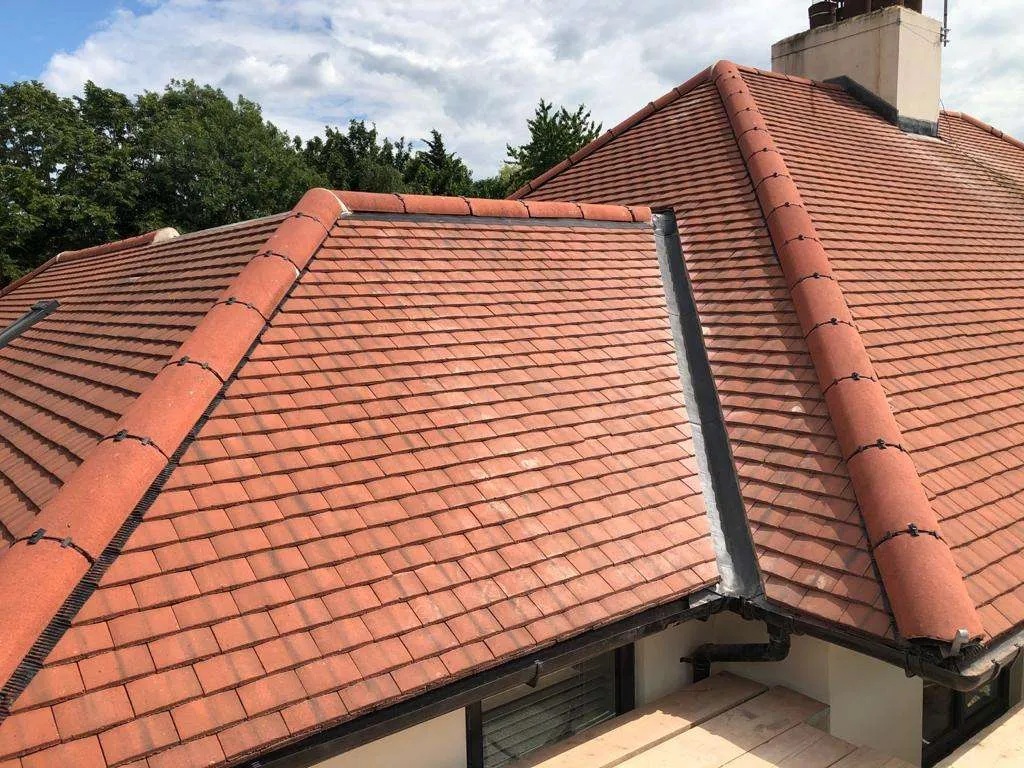
- Roof shape — hips, valleys and dormers all add cutting and labour time
- Batten and timber condition — replacing rotten battens typically adds £600–£2,000
- Access — a detached roof scaffolds more cheaply than one boxed in by neighbours
- Matching an existing roof — sourcing a close colour match can add cost and lead time
These are general market ranges for Melton Mowbray, not a quote for your roof. Two similar-looking properties can price very differently once profile, access and timber condition are factored in. A fixed price needs a survey.
How We Fit a Clay Tiled Roof, Start to Finish
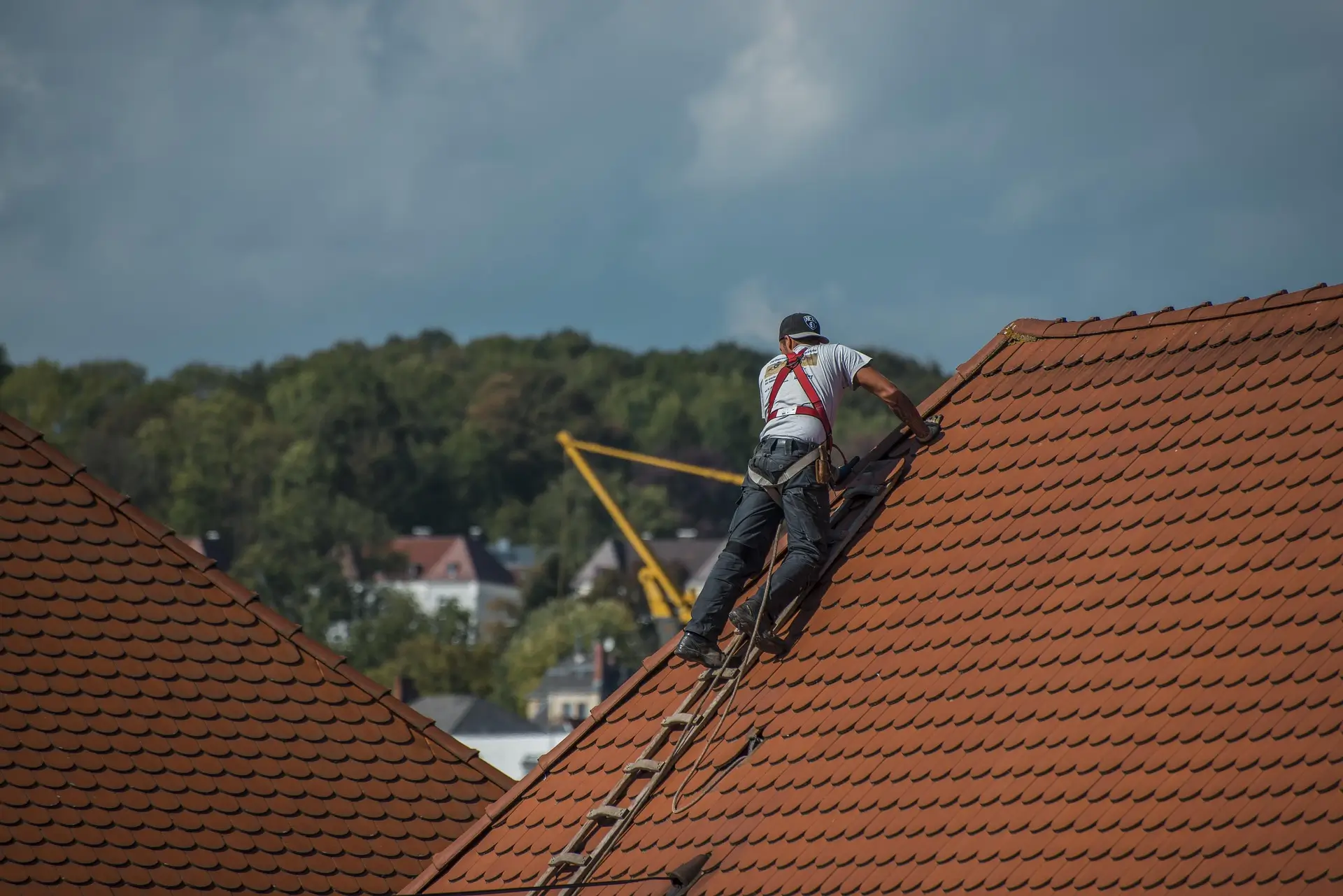
Clay roof tiling follows a set order on every job, whether it is a full re-roof or a large repair section.
- Scaffold erected and the site made safe
- Old tiles stripped and battens checked, rotten timber replaced
- BBA-certified breathable underlay fitted to current standards
- New battens fixed to BS 5534 spacing for the tile profile chosen
- Clay tiles laid from the eaves up, double-lapped or interlocked as the profile requires
- Ridge, hip and valley details finished to shed water cleanly
- Site cleared and the finished roof checked before we leave
Correct underlay and batten fixing matters more on clay than on most other coverings, since a heavier tile puts more load through every fixing point. The Roof Tile Association's technical guidance on underlay and battens sets out the head-lap and batten spacing rules we work to on every job, and it is worth a read if you want the detail behind the standard.
A typical semi-detached re-roof in clay pantile takes 4 to 7 working days. Plain tile, laid double-lapped tile by tile, usually runs 6 to 10 days. Exposed sites out toward the Vale of Belvoir scarp and the high ground around Scalford take a harder battering from wind-driven rain, so we allow extra time for ridge and verge detailing on those roofs rather than rushing it. Weather has the final say on any schedule, and we build a realistic allowance in rather than promising a date we cannot keep.
Keep a Clay Tiled Roof Looking Its Best for Decades
Clay barely fades, and a well-laid roof needs very little done to it. A little regular attention keeps it performing for the whole of its long life.
- Clear moss and lichen with a soft wash rather than a pressure washer, which can crack tiles
- Check ridge tiles and bedding after any named storm
- Clear gutters and valleys of leaves each autumn
- Book a visual check every three to five years, or sooner on shaded or damp sites
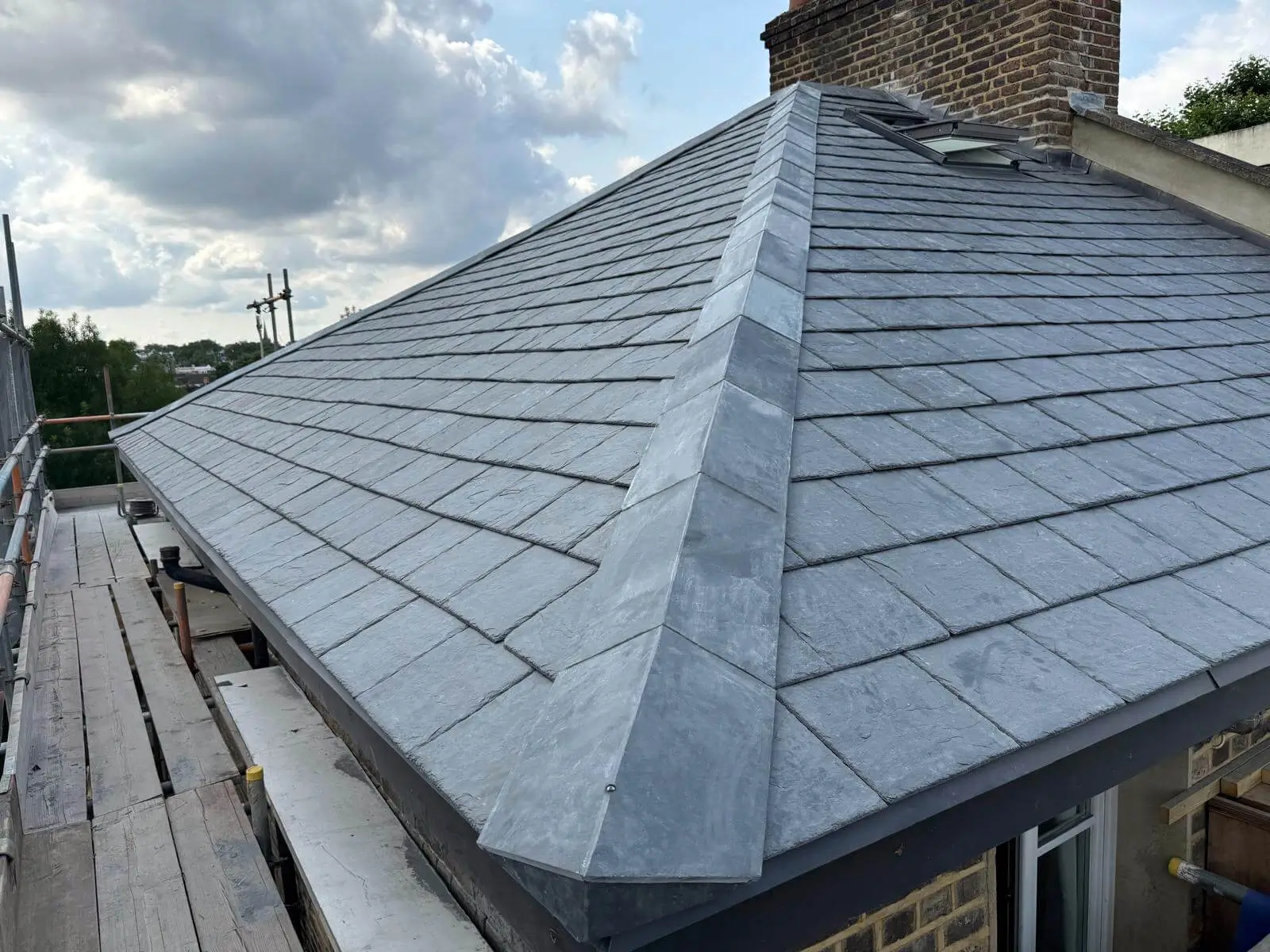
Moss holds damp against a clay tile and, in a hard frost, that trapped water can force flaking or cracking. It is more of a concern on shaded roofs near Melton Country Park and the wooded edges of town than on an open, sunny slope. A loose or slipped ridge tile is one of the most common clay roof problems we see, and our ridge tile repairs and re-bedding service deals with it quickly, before wind gets underneath and takes more tiles with it. Burton Lazars, sitting up on its hillside, gets more of this wind-driven wear than a sheltered street near the old Stockyard and Cattle Market site in town.
Why Melton Mowbray Homeowners Choose Tate & Sons for Clay Roof Tiling
Clay roof tiling rewards a fitter who understands period property, not just someone who can lay a tile straight. James Tate, our founder, spent fifteen years working roofs across Melton Mowbray and the East Midlands before starting the business, and he is happiest up a ladder on a tricky period roof, working out how to put it right without losing its character. He still prices most clay tiling jobs himself, and that founding philosophy — find out what is genuinely wrong, use the right materials, stand behind the result — shapes every quote he writes.
Daniel Oakland, our project manager, brings over twenty years of hands-on fitting experience to every re-roof, including the heritage slate and lead detailing that period clay roofs often need alongside the tiling itself. Between us we carry over 40 years of combined team experience, hold NVQ Level 2 and 3 qualifications in Roofing Occupations, and hold CSCS cards. Every clay roof tiling job comes with a 10-year workmanship guarantee, so you are covered long after the scaffold comes down. Read more about the people behind the work on our About Tate & Sons Roofing page.
Areas We Serve Across Melton Mowbray and the Vale of Belvoir
We fit and repair clay tiled roofs across Melton Mowbray and the surrounding villages. If your area isn't on the list below, call us anyway — there's a strong chance we already cover you.
- Melton Mowbray (LE13)
- Asfordby (LE14 3)
- Old Dalby (LE14 3)
- Nether Broughton (LE14 3)
- Frisby on the Wreake (LE14 2)
- Wymondham (LE14 2)
- Long Clawson (LE14 4)
- Harby (LE14 4)
- Stathern (LE14 4)
- Waltham on the Wolds (LE14 4)
- Bottesford (NG13)

Got Questions?
Your Clay Roof Tiling Questions, Answered Properly
How much does clay roof tiling cost in Melton Mowbray?
Machine-made clay pantile or interlocking tile typically costs £70–£150 per m² installed, while plain clay tile laid double-lapped runs £130–£220 per m². On a typical semi-detached roof, that is roughly £7,000–£13,000 for pantile or interlocking clay, and £12,000–£20,000 for plain tile, with handmade or reclaimed tile on listed properties running higher still. A free drone survey gives you an exact written price rather than a phone estimate.
How long do clay roof tiles actually last?
Good quality clay tile typically lasts 60 to 80 years, and well-made plain tile or handmade clay can pass 100 years with reasonable care. Lifespan depends on the quality of the tile, how well it was laid, and how exposed the roof is to wind and frost. A roof that has been re-bedded and maintained properly will always outlast one left to patch itself.
What is the difference between a pantile and a plain clay tile?
A pantile is a large S-shaped tile laid in a rolling, single-lap pattern that covers more roof per tile and sheds water fast. A plain tile is small, flat, and laid double-lapped for a finer, more traditional texture. Plain tile suits cottages and listed buildings where detail matters most, while pantile suits the wider run of traditional Melton streets at a lower cost.
Do I need planning permission to re-roof with clay tile?
Most like-for-like clay roof tiling does not need planning permission. Listed buildings and conservation areas are the exception, where you will usually need consent before work starts and the council will expect a genuine matching clay profile and colour. We check a property's status before quoting so there are no surprises once the scaffold is booked.
Are clay tiles too heavy for an older roof structure?
Clay tile is heavier than most concrete alternatives, and an older roof structure needs checking before it goes back on. In most cases the existing timbers cope fine, since they were often built for a similar weight originally. Where a structure has weakened over time, we flag it during the survey and price any strengthening work into the quote upfront, not as a surprise later.
Can a few cracked or slipped clay tiles be repaired without a full re-roof?
Yes, in most cases. Individual cracked, slipped or missing clay tiles can be replaced or re-bedded without disturbing the rest of the roof, provided the surrounding tiles and battens are still sound. It only becomes a full re-roof job once damage is widespread, battens have failed, or repeated patch repairs have left a visible mismatch of tile colour and age.
Why do handmade clay tiles vary slightly in colour across the roof?
Slight colour variation is normal and expected on handmade clay tile, since each one is fired individually and the clay, kiln position and firing time all affect the final shade. This is a feature, not a fault, and it is exactly what gives a handmade clay roof its warmth compared to a uniform machine-made finish. Reputable suppliers blend tiles from several batches during laying to spread the variation evenly across the roof.
Can new clay tiles be mixed with reclaimed ones on the same roof without looking patched?
Yes, when it is done properly. A skilled fitter blends reclaimed and new clay tile across the whole roof slope rather than grouping old tiles in one visible patch, so the weathering variation reads as natural rather than repaired. This approach is common on period homes around Old Dalby and Frisby on the Wreake, where matching a historic roofline matters as much as the tile itself.
Does the exposed weather off the Wolds change how clay tiles need fixing?
Yes. Properties out toward the Vale of Belvoir scarp, and up around Scalford and the higher ground near Somerby, take a harder battering from wind-driven rain than a sheltered street in town. Ridge fixings, batten gauge and hip and valley detailing often need to go beyond the bare minimum on these sites to hold up long-term. We factor a property's height, position and exposure into the specification for every clay roof tiling job.
Book Your Free Drone Roof Survey Today
See exactly what your clay tiled roof needs before any work starts. No ladders, no pressure — just a clear picture from a local Melton Mowbray team.
Every season a damaged or moss-choked clay roof is left alone, moisture works further into the battens and timber underneath, and small cracked tiles turn into a bigger, more expensive repair. A quick, free survey today tells you exactly where you stand, and often the right answer is smaller and more affordable than you feared. Book now, get an honest quote, and keep your roof's character intact for decades to come.
Get in Touch
Tate & Sons Roofing, Melton Mowbray
13 Cromwell Road, Melton Mowbray, LE13 0AD
📞 01664 490955
✉️ [email protected]