
🏠 Trusted Local Roofers
Lead Work & Lead Flashing Chesterfield
Most roof leaks do not start in the middle of a roof slope. They start at the joints, where a chimney, valley or wall meets the roof covering, and that is exactly where lead flashing does its job. Tate & Sons Roofing has cut, dressed and fitted lead across Chesterfield's older streets and newer estates alike, from Victorian terraces near the town centre to modern homes toward Wingerworth. As a roofing contractor across Chesterfield, we treat lead work as a trade in its own right, not an afterthought tacked onto a re-roof.
This page covers how to spot failing lead before it soaks your timbers, what proper lead work actually costs in Chesterfield, the material choices open to you, and how our team dresses and fits every joint by hand. You will also find straight answers to the questions homeowners ask us most about lead flashing.
- Fully Insured
- 10-Year Guarantee
- 5-Star Rated
Quick Free Estimate - No Obligation
We're not just roofers – we're your neighbours.
Fully Insured • Response within 15 mins
🔒 Your details are safe with us. No spam, ever.
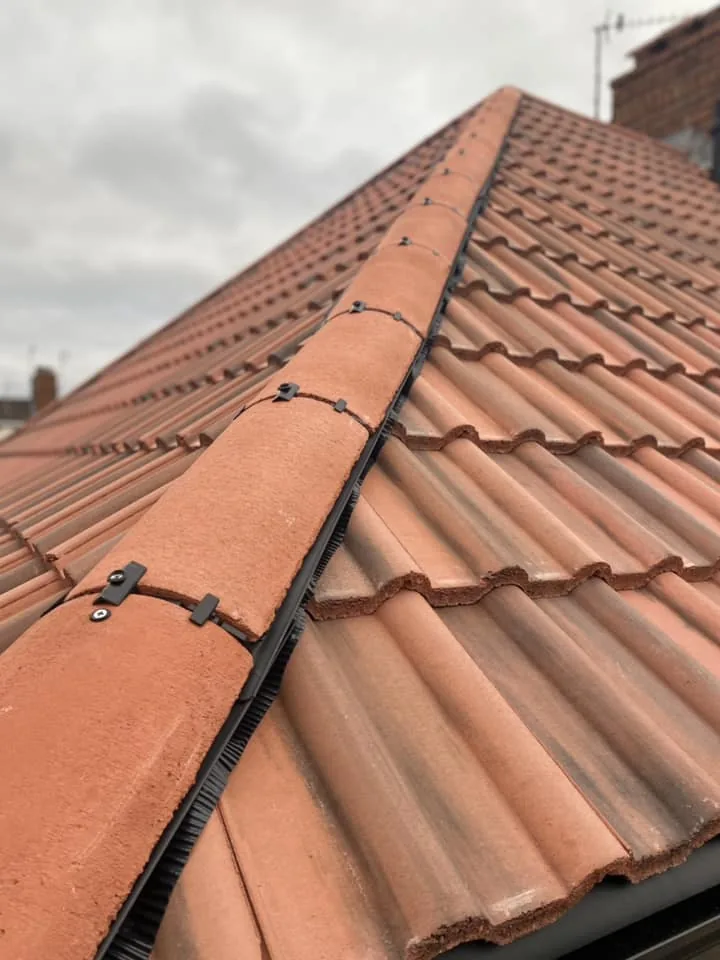
How to Tell Your Lead Flashing Has Failed, Not Just Aged
Lead can look tired for decades and still work perfectly well. The problem is movement, cracking or a gap at the top edge, not the grey patina that develops naturally over time.
Chesterfield's older terraces, especially around Old Whittington and the streets closest to the town centre, often carry lead that is fifty years old or more. Much of it is still sound. What fails first is usually the mortar wedge that holds the top edge into the brick joint, letting the whole flashing pull loose in the wind.
Look out for these warning signs before a small gap turns into a damp chimney breast:
- Damp patches or brown staining on a chimney breast wall inside the house
- Green or white powdery deposits forming on the lead surface
- Cracks or splits running along a fold, corner or step
- Lead lifting away from the brickwork at the top edge
- A rattling or tapping noise from the roof during strong wind
- Rot or a musty smell in loft timbers near a chimney or valley
Valleys are worth extra attention, since they carry the combined rainfall from two roof slopes. A split valley lining can pour water into the roof structure for months before a ceiling stain finally gives it away. A free drone survey lets us check every chimney, valley and abutment close up, without anyone standing on your roof first.
Choosing the Right Lead for Your Chesterfield Roof
Not every joint on a roof needs the same thickness of lead. The Lead Sheet Training Academy grades rolled lead sheet in codes, and using the correct code for each detail is what keeps flashing watertight for a lifetime rather than a decade.
Code 4 lead is the standard choice for most chimney flashing and simple abutments, giving a good balance between malleability and resistance to splitting as it expands and contracts. Code 5 is thicker and suits valleys, aprons and any detail carrying a heavier flow of water, since it needs to withstand more movement without fatiguing. We follow the current BS 6915 code of practice for every lead detail we dress, as set out in the Lead Sheet Training Academy's Rolled Lead Sheet Manual, rather than cutting corners on thickness to save a few pounds.
Homeowners increasingly ask about lead-alternative systems too, particularly for larger flat sections or where lead theft is a worry. The table below sets out how milled lead compares with a modern non-lead flashing system on cost, lifespan and best use.
We will talk you through which option suits your roof, budget and how long you plan to stay in the property during your free drone survey. Neither option is automatically right for every job.
| System | Typical Cost (installed) | Typical Lifespan | Best For |
|---|---|---|---|
| Traditional Milled Lead (Code 4/5) | £90-£180 per linear metre, chimney or valley detail | 60-100+ years | Period homes, listed buildings, conservation areas, valleys |
| Lead-Alternative Systems (e.g. Ubiflex) | £45-£90 per linear metre, chimney or valley detail | 20-30 years | Budget re-roofs, theft-prone sites, large flat runs |
Lead Flashing Cost in Chesterfield: What You'll Actually Pay
Most chimney lead flashing replacement in the UK costs between £350 and £1,100, and the biggest single factor is whether scaffolding is needed. Without scaffold, a straightforward chimney flashing job typically runs £450-£600 for materials and labour. Add scaffolding and the same job often lands between £700 and £1,100.
Small targeted repairs, such as re-wedging a lifted edge or patching a split corner, usually cost £200-£300 where access is already available. Valley relining costs more than a chimney flashing, since Code 5 lead and a longer run of material are both needed, and jobs often reach £600-£1,500 depending on valley length and pitch.
Cost rises with the number of chimney faces, tricky access, steep pitches and older brickwork that needs raking out before new lead can be wedged in. Cost falls when several jobs share one scaffold visit, which is why we often suggest checking every chimney and valley while the scaffold is already up for another repair.
A fixed price for your lead work needs a survey, since no two chimneys or valleys sit the same way on a roof.
Lead Theft and Security: Protecting Your Investment
Lead has scrap value, and that makes some roofs a target, particularly flat-roofed extensions, garages and church-style buildings with wide expanses of exposed lead. Chesterfield is no exception, and we fit security measures alongside new lead work whenever a property is at risk.
SmartWater forensic marking is the most established option, coating the lead with a traceable liquid that links stolen metal back to your property under UV light and is designed to survive years of weather exposure. Scrap dealers increasingly scan for it, which makes marked lead far harder for a thief to sell on.
Anchoring lead more securely, using tamper-resistant clips, and switching high-risk flat sections to a lead-alternative system with no resale value are all worth discussing if your property has suffered lead theft before, or sits somewhere visible and quiet, such as behind a Holymoorside outbuilding or a rear extension roof that cannot be seen from the street.
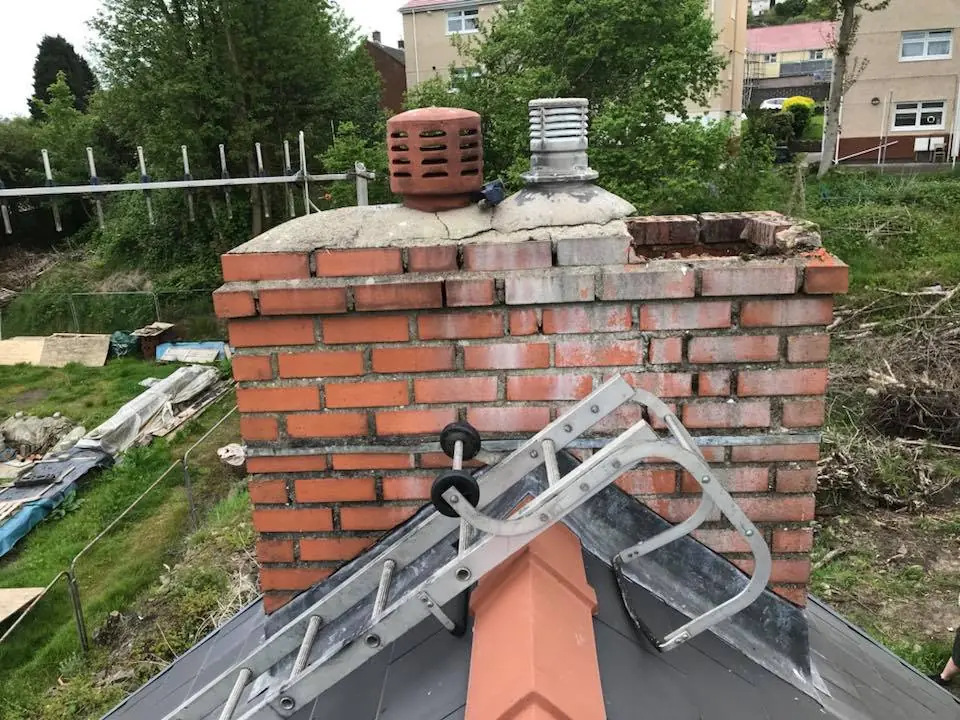
How We Dress and Fit Every Lead Detail, Step by Step
James Tate, our founder and Managing Director, is personally strong on lead detailing and heritage roof work, a skill built over 15 years working roofs across Derbyshire before he started the business. He still prices most lead jobs himself, because getting the detail right on a chimney or valley depends on judgement that a standard quote sheet cannot capture.
Daniel Oakland, our Project Manager and Lead Roofer, carries out much of the on-site lead dressing, alongside his work on EPDM, GRP and standing-seam systems. Between them, chimney flashing, valley linings and abutment details get the same hand-dressed care whether the property is a 1930s semi or a listed cottage near the town centre.
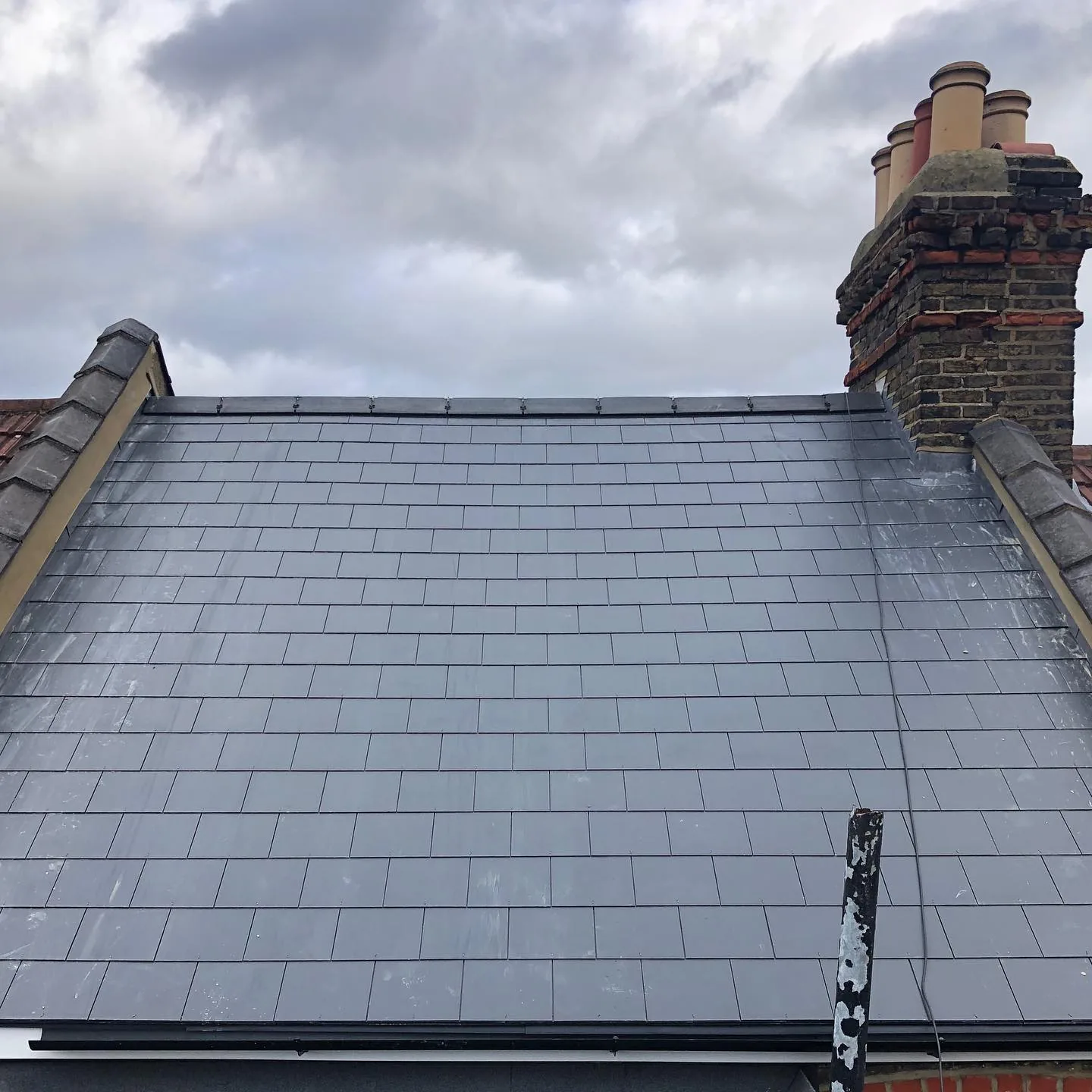
We start by raking out old mortar and stripping the failed lead back to sound brickwork. Any rotten timber underneath gets replaced before new lead goes anywhere near the joint, since dressing lead over damaged decking only hides the problem for a year or two.
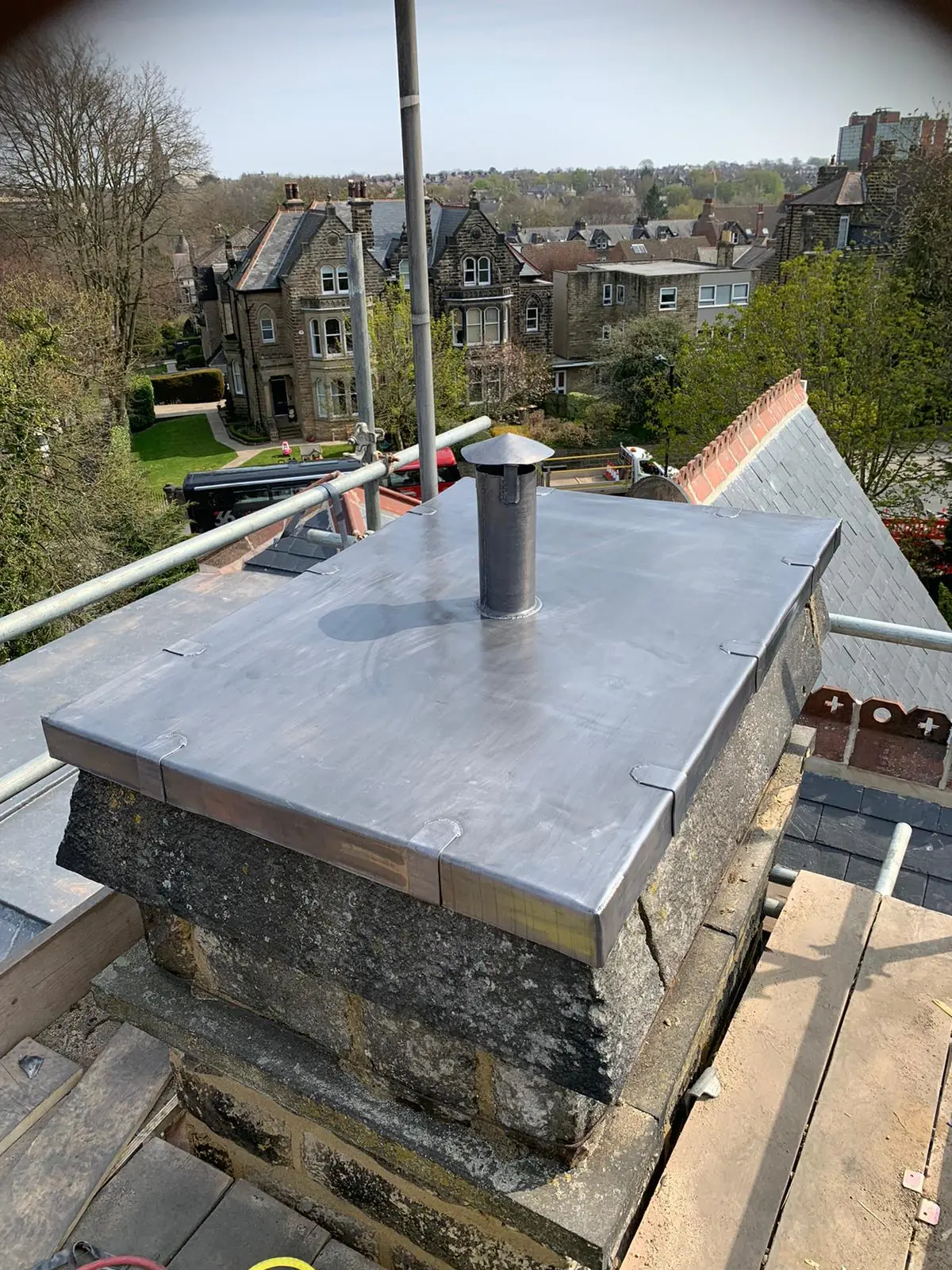
Each piece is then cut and dressed to the correct code for that detail, bossed by hand around corners rather than folded sharply, which is what stops the lead splitting as it expands in summer heat. The top edge is wedged and pointed into a proper mortar chase, not just smeared with sealant, using the same careful approach as our dedicated chimney repointing work. Clips or welts are used at every step to allow for natural thermal movement.
Most single-chimney lead flashing jobs are finished in a single day once scaffold access is in place. Valley relining or lead work across several chimneys on a larger Chesterfield property can take two to three days.
Quality Checks, Guarantees and Keeping Your Lead Watertight
Every lead detail we fit comes with a 10-year workmanship guarantee, on top of the decades of service life the lead itself should give you. James or Daniel signs off every lead job with a close check of every fold, weld and mortar joint before we leave the site.
Lead needs very little upkeep once it is fitted correctly. Check chimney flashing and valleys after major storms, keep gutters clear so water does not back up against a valley's lower edge, and get any lifted section re-wedged quickly rather than waiting for a stain to appear on the ceiling below.
If you are ever unsure whether a patch of green staining or a hairline crack matters, a quick photo sent to our Marsden Street office is often enough for us to tell you whether it needs urgent attention or can wait for your next scheduled check.
Why Choose Tate & Sons Roofing for Your Lead Work
James Tate founded the business after 15 years working roofs across Derbyshire and the East Midlands, and lead detailing on heritage properties remains one of his strongest personal skills. He still prices most lead and flashing jobs himself, because a well-dressed valley or chimney apron takes an eye that only comes from years of doing the work by hand.
Daniel Oakland, our Project Manager and Lead Roofer, brings over 20 years in the trade and carries out lead detailing alongside his work on modern roofing systems. Between James's heritage expertise and Daniel's day-to-day site experience, your chimney, valley or abutment gets the same standard of care whether your home dates from the 1890s or last decade.
Our wider team holds NVQ Level 2/3 qualifications in Roofing Occupations, CSCS cards and NFRC trade membership, with over 40 years of combined experience between us. Read more about the people who will dress the lead on your roof on our About page.
Every lead job comes with a 10-year workmanship guarantee and starts with a free, no-obligation drone roof survey, so you can see exactly what condition your existing flashing is in before we quote a thing.
Areas We Serve Around Chesterfield
We fit and repair lead flashing across Chesterfield and the surrounding towns and villages listed below.
- Chesterfield (S40 / S41)
- Brampton (S40)
- Hasland (S41)
- Newbold (S41)
- Staveley (S43)
- Brimington (S43)
- Whittington Moor (S41)
- Old Whittington (S41)
- Wingerworth (S42)
- Clay Cross (S45)
- Dronfield (S18)
- Eckington (S21)
- Holymoorside (S42)
Got Questions?
Your Lead Work & Lead Flashing Questions, Answered Properly
How much does lead flashing cost to replace in Chesterfield?
Most chimney lead flashing jobs cost between £350 and £1,100, depending mainly on whether scaffolding is needed. A simple repair with existing access can cost as little as £200-£300, while a full valley reline usually runs £600-£1,500. We only give a fixed price after a free drone survey of your actual roof.
How long does lead flashing last?
Correctly fitted milled lead typically lasts 60 to 100 years or more, making it one of the longest-lasting parts of any roof. How long it lasts depends heavily on the code of lead used, the quality of the dressing work, and how exposed the detail is to wind and rain. Poor original installation is the most common reason lead fails early.
What is Code 4 or Code 5 lead, and does it matter?
Lead codes describe the thickness of the rolled sheet, and using the right one for each job matters. Code 4 is the standard choice for most chimney flashing and simple abutments. Code 5 is thicker and better suited to valleys, aprons and other details that carry more water or need extra resistance to movement. Using an undersized code is a common cause of early cracking.
Can lead flashing be repaired, or does it always need replacing?
Many lead problems can be repaired rather than replaced. If the lead itself is sound but the mortar wedge at the top edge has failed, re-wedging and re-pointing the joint often solves the problem. Full replacement becomes the right answer once the lead has cracked, corroded through, or was undersized for the job in the first place. We tell you honestly which category your roof falls into.
Is my lead roof or flashing at risk of theft?
Any exposed lead has some scrap value, and flat roofs, garages and rear extensions that are hidden from the street carry the highest risk. SmartWater forensic marking is the most effective deterrent, since it forensically links stolen lead back to your property and scrap dealers now scan for it. For high-risk sections, switching to a lead-alternative flashing system removes the resale value altogether.
What causes lead flashing to fail around a chimney?
Most chimney flashing failures come down to movement, age or poor original detailing rather than the lead simply wearing out. The mortar wedge holding the top edge into the brick joint erodes over time, leaving a gap that water finds on every heavy rainfall. Sharp folds instead of properly bossed corners also crack sooner, since the lead cannot expand and contract naturally.
Should I use lead or a lead-alternative flashing like Ubiflex?
Traditional milled lead lasts far longer, typically 60 to 100 years against 20 to 30 years for a good lead-alternative system, and remains the right choice for period and listed properties. Lead-alternative systems cost less to buy and fit, weigh far less, and have no scrap value if a property has a theft problem. We recommend the option that suits your budget, your roof's age and how long you plan to own the property.
Does lead flashing need planning permission or listed building consent?
Straightforward like-for-like lead flashing repairs do not usually need planning permission or listed building consent. If your property is listed, such as several buildings close to the Crooked Spire in the town centre, replacing or altering lead detailing can require listed building consent even for repair work. We check your property's status before quoting so there are no surprises partway through the job.
Why does old lead sometimes twist or move on a roof?
Lead expands and contracts with temperature far more than brick or timber, and if it is not detailed with enough allowance for that movement, it can crack, ripple or pull away from its fixings over time. Chesterfield's own Crooked Spire is the most striking local example, where 33 tonnes of 17th-century lead sheeting is thought to have helped twist the timber frame beneath it as the sun-facing side expanded faster than the shaded side. Modern lead work uses welts, clips and correctly sized bays specifically to avoid that kind of uncontrolled movement on a much smaller scale.
Book Your Free Drone Roof Survey Today
A lifted piece of chimney flashing rarely stays a small problem. Every heavy downpour off the Peak District pushes more water past it, and by the time a stain reaches your ceiling, the timbers underneath have often been wet for months. Book your free, no-obligation drone roof survey today and get a clear, fixed price for lead work on your Chesterfield roof.
📍 3 Marsden Street, Chesterfield, S40 1JY
📞 01246 956550
Call the Chesterfield team today on 01246 956550, or request your free drone survey online. We’re already working across your area.
Get in Touch
Tate & Sons Roofing — Chesterfield
3 Marsden Street, Chesterfield, S40 1JY
📞 01246 956550
✉️ [email protected]