
🏠 Trusted Local Roofers
Roof Cleaning Nottingham
A green, grimy roof drags down the whole look of a Nottingham street, and thick moss can hold water against your tiles for weeks at a time. This page covers what roof cleaning in Nottingham actually involves, why the wrong method causes more harm than the moss itself, and what a proper job costs. As a roofing contractor working across the city, we treat roof cleaning as a roofing job first and a cosmetic one second — because the method matters more than the shine it leaves behind.
- Fully Insured
- 10-Year Guarantee
- 5-Star Rated
Quick Free Estimate - No Obligation
We're not just roofers – we're your neighbours.
Fully Insured • Response within 15 mins
🔒 Your details are safe with us. No spam, ever.
Does Your Nottingham Roof Actually Need Cleaning?
Not every dark patch or green streak means you need a full clean. Here's what actually calls for action, and what's usually fine to leave alone.
- Moss banking up thick enough to block gutters, valleys, or outlets — this is the main reason to act, not the moss itself
- Green or black streaking down tiles, usually algae, which is mostly a look-of-the-house issue rather than a structural one
- Lichen — the crusty white, grey, or orange patches that bond tightly to the tile surface — which is slower-growing and harder to shift than moss or algae
- Dark staining that's actually roof grime, moss residue, and airborne pollution rather than active growth
- Debris sitting in valleys and behind chimneys after autumn leaf-fall, common on tree-lined roads around Mapperley and Sherwood
A light dusting of moss on a north-facing slope isn't an emergency. Tiled roofs generally don't fail because they're dirty — the National Federation of Roofing Contractors is upfront that moss only needs removing once it's blocking drainage, not for looks alone. What matters more is how any cleaning gets done, which is where most roof cleaning jobs go wrong.
Soft Washing vs Pressure Washing: Which One Won't Wreck Your Roof?
Soft washing is the industry-standard method for tiled and slated roofs: a low-pressure rinse, well under 500 psi (roughly the force of a strong garden hose), paired with a roof-safe biocide — a chemical treatment that kills moss, algae, and lichen at the root rather than just knocking it off the surface. Pressure washing, sometimes called jet washing, uses a concentrated high-pressure jet instead. It strips moss fast and looks dramatic, but that same force drives water up under tile laps and into flashings, valleys, and joints it was never meant to reach.
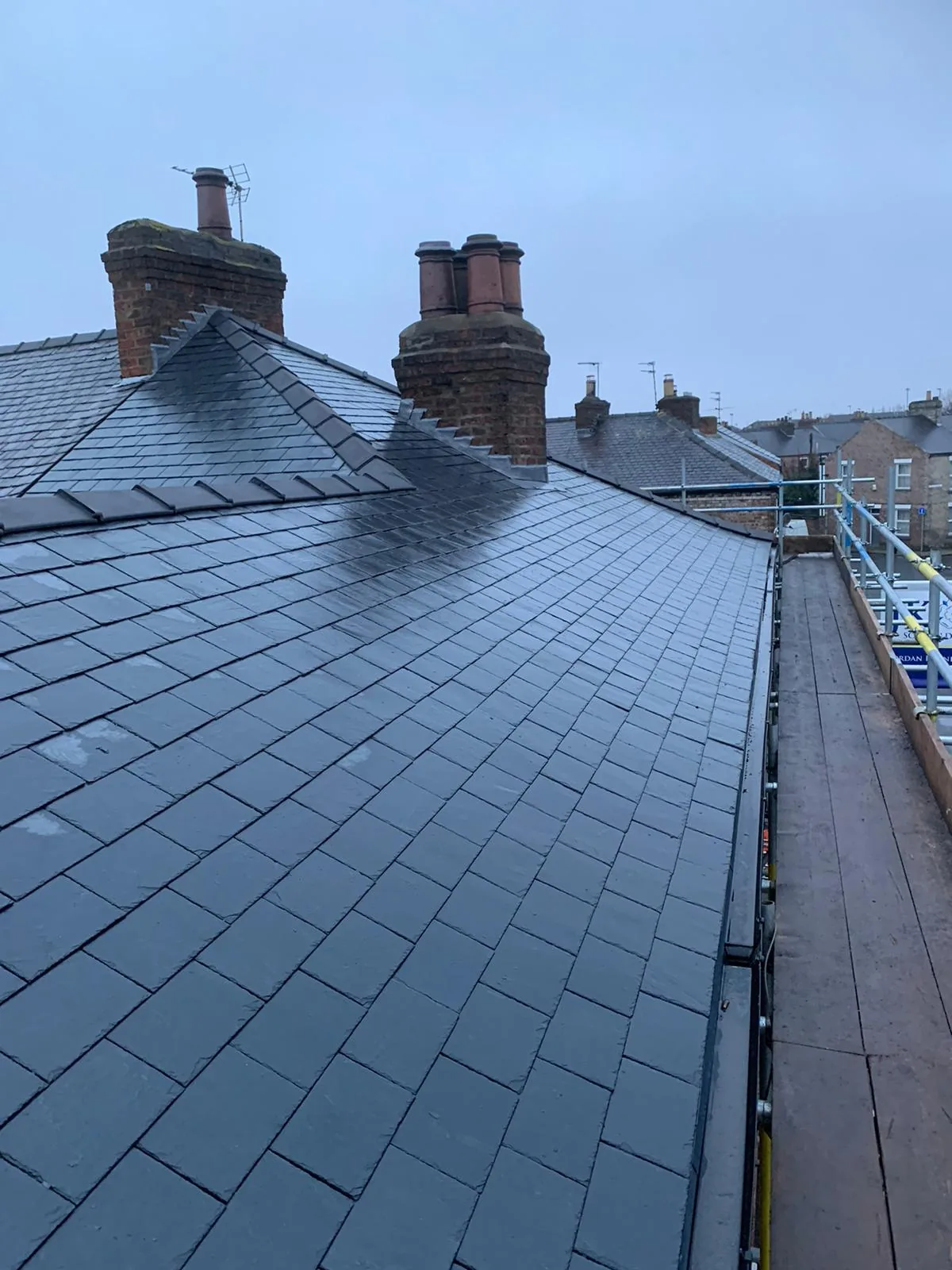
Roofing bodies including the NFRC warn that aggressive, high-pressure removal raises real questions about a roof's structural integrity, and can crack or dislodge tiles outright — see the NFRC's guidance on roof moss for the full detail. Pressure washing also tends to leave moss spores behind in the tile's texture, so growth comes back within a year or two. Soft washing's biocide keeps working after the visit, so regrowth typically stays away for three to five years rather than twelve to eighteen months.
In short: for concrete or clay roof tiles, soft washing is the safe, recognised method. Pressure washing is faster and cheaper but risks cracked tiles, forced-in water, and moss that's back within a year. Natural slate can sometimes tolerate a gentler pressure rinse, but we assess that case by case rather than assuming.
What Happens Before a Single Tile Gets Touched
We never quote a roof clean off a photo or a guess from the street. Every job starts with a proper look.
- We carry out a free drone roof survey covering the whole roof, gutters, valleys, and any awkward junctions — no ladders and nobody walking on your tiles just to look
- You get clear photos showing exactly what's growing where, and how bad the blockage risk is
- We tell you honestly whether it's a light gutter clear-out, a full soft wash, or something a clean alone won't fix — such as slipped or cracked tiles underneath the moss
- We check tile condition first, because cleaning a roof with loose or brittle tiles can do more harm than the moss ever would
- If you're in a conservation area around The Park or parts of Lenton, we flag anything needing extra care before work starts
- You get a fixed price and an agreed scope before we touch anything
How We Clean Your Roof Without Voiding Your Warranty
Here's the process we follow on a typical soft wash job, start to finish.
- Clear gutters, valleys, and downpipes of loose debris first, so nothing washes down and blocks them further
- Apply a roof-safe biocide across the affected areas, formulated to kill moss, algae, and lichen without stripping the tile's surface coating
- Leave the biocide to work — most products need a dwell time of several hours to a few days before rinsing, so moss dies at the root instead of just going brown
- Rinse at low pressure to lift dead growth away, working from ridge to eaves so water always runs downhill and off the roof
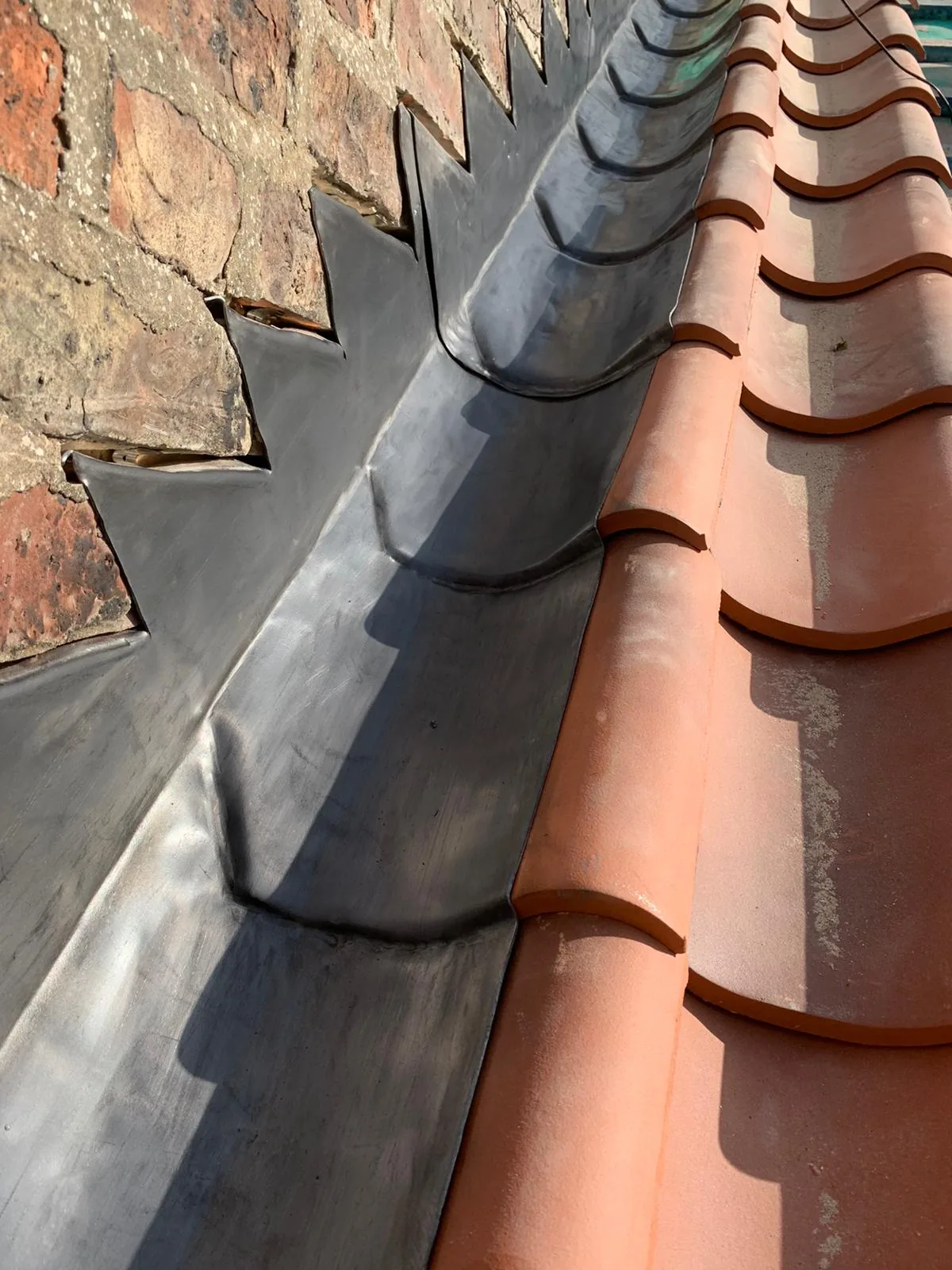
- Take extra care around lead flashings, ridge tiles, and any solar panels, protecting seals and cell surfaces from chemical run-off
- Clear gutters and outlets a second time once loosened debris has washed down, so the whole system drains freely
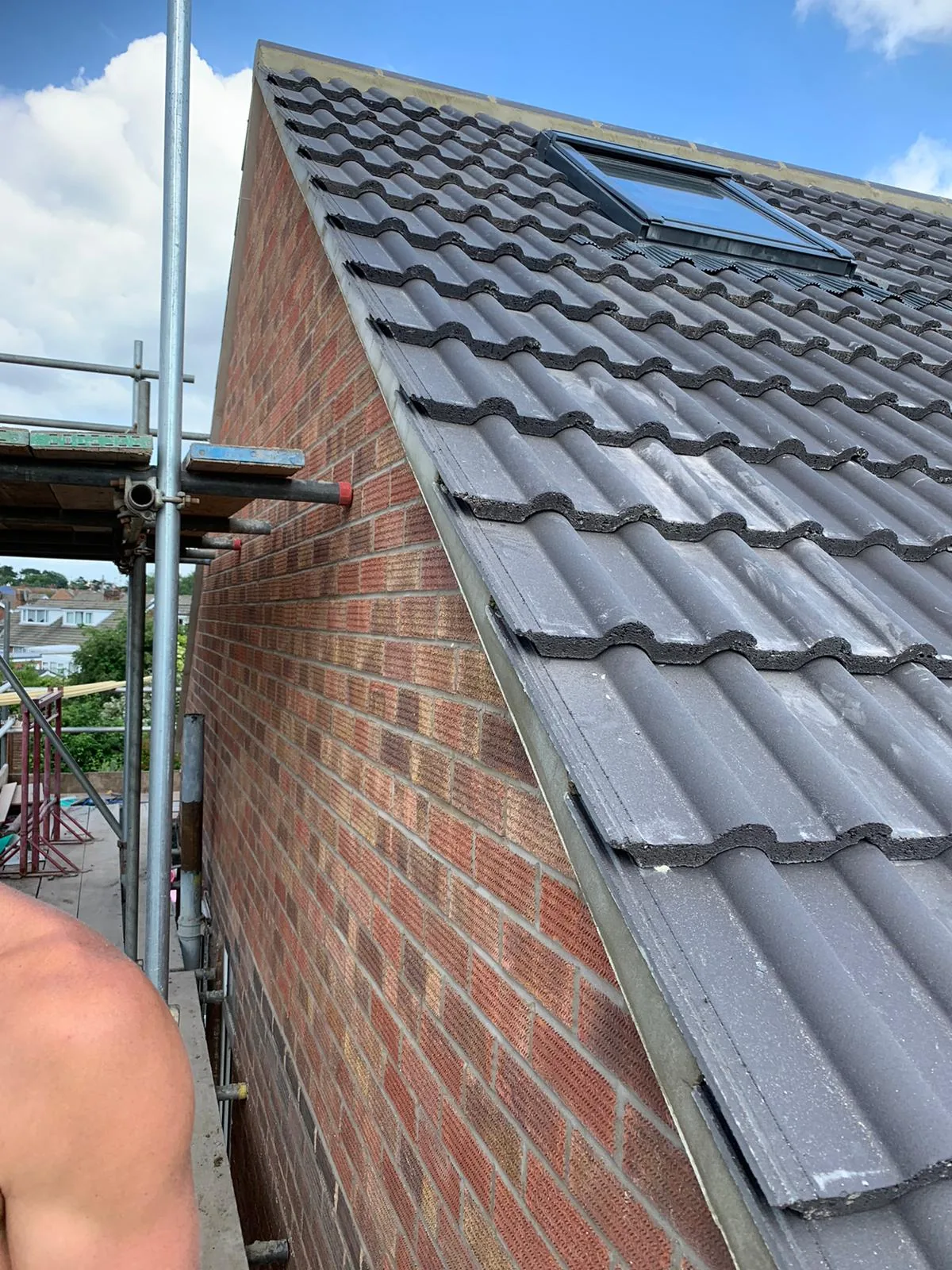
A standard semi-detached roof clean usually takes half a day to a full day, weather and access allowing. We work from a ladder or scaffold tower depending on the roof height and pitch, and we don't put unnecessary foot traffic on tiles that don't need it.
How to Check a Roof Clean Was Actually Done Properly
A good roof clean should leave you with more than just a tidier-looking roof. Here's what to check once the job's finished.
- Gutters, downpipes, and outlets should run freely with no trapped moss or grit left inside
- Tiles should look clean but not glossy, bleached, or stripped of their surface texture — a sign of a method that was too aggressive
- There should be no cracked, chipped, or dislodged tiles that weren't there before
- Ask what biocide was used and how long the regrowth-free period should last — a reputable cleaner will tell you straight, not guess
- Check that plants, patios, and any water butts nearby were protected or rinsed down, since some biocides are harmful to soil and aquatic life if run off unchecked
- You should receive written confirmation of what was done and any guarantee attached to the treatment
Every roof clean we carry out is backed by our 10-year workmanship guarantee on any roofing work involved, and we'll always tell you if a problem we find needs more than a clean to put right.
Stopping Moss and Algae Coming Straight Back
A clean roof stays cleaner for longer with a small amount of upkeep. Regrowth speed depends heavily on shade, tree cover, and which way your roof faces.
- North-facing slopes and roofs shaded by trees regrow moss fastest, since damp and shade are exactly what it needs
- Trim back overhanging branches where you can — less leaf litter means less trapped moisture on the tile surface
- Clear gutters twice a year, especially after autumn leaf-fall, so trapped debris doesn't hold water against the roof edge
- A repeat biocide treatment every three to five years keeps moss and algae from re-establishing, well before it's thick enough to matter
- If moss is a persistent problem on a particular slope, our dedicated moss and algae removal service covers heavier, longer-established growth in more depth than a routine clean
- Check the roof after any storm — displaced tiles let in far more damp than a patch of moss ever will
What Is Roof Cleaning?
Roof cleaning is the removal of moss, algae, lichen, and grime from a roof surface, usually by soft washing — a low-pressure rinse combined with a biocide treatment that kills growth at the root. It's mainly done to stop moss blocking gutters and valleys, and to improve how a roof looks. Pressure washing is generally avoided on tiled roofs because the force can crack tiles and drive water into joints. A proper job also involves gutter clearance and a check of tile condition, not just a rinse.
Cost & Pricing Guidance
Roof cleaning pricing across the UK for 2025/26 typically runs like this:
- Per square metre: roughly £8-£12 for a standard clean, £12-£16 per m² for a full soft wash with biocide
- Bungalow or small semi-detached roof: £350-£550
- Standard semi-detached house: £450-£750
- Larger detached property: £650-£1,100+
- Biocide treatment as an add-on: £150-£300
- Scaffold tower or cherry picker access, where a ladder isn't enough: £150-£400 extra
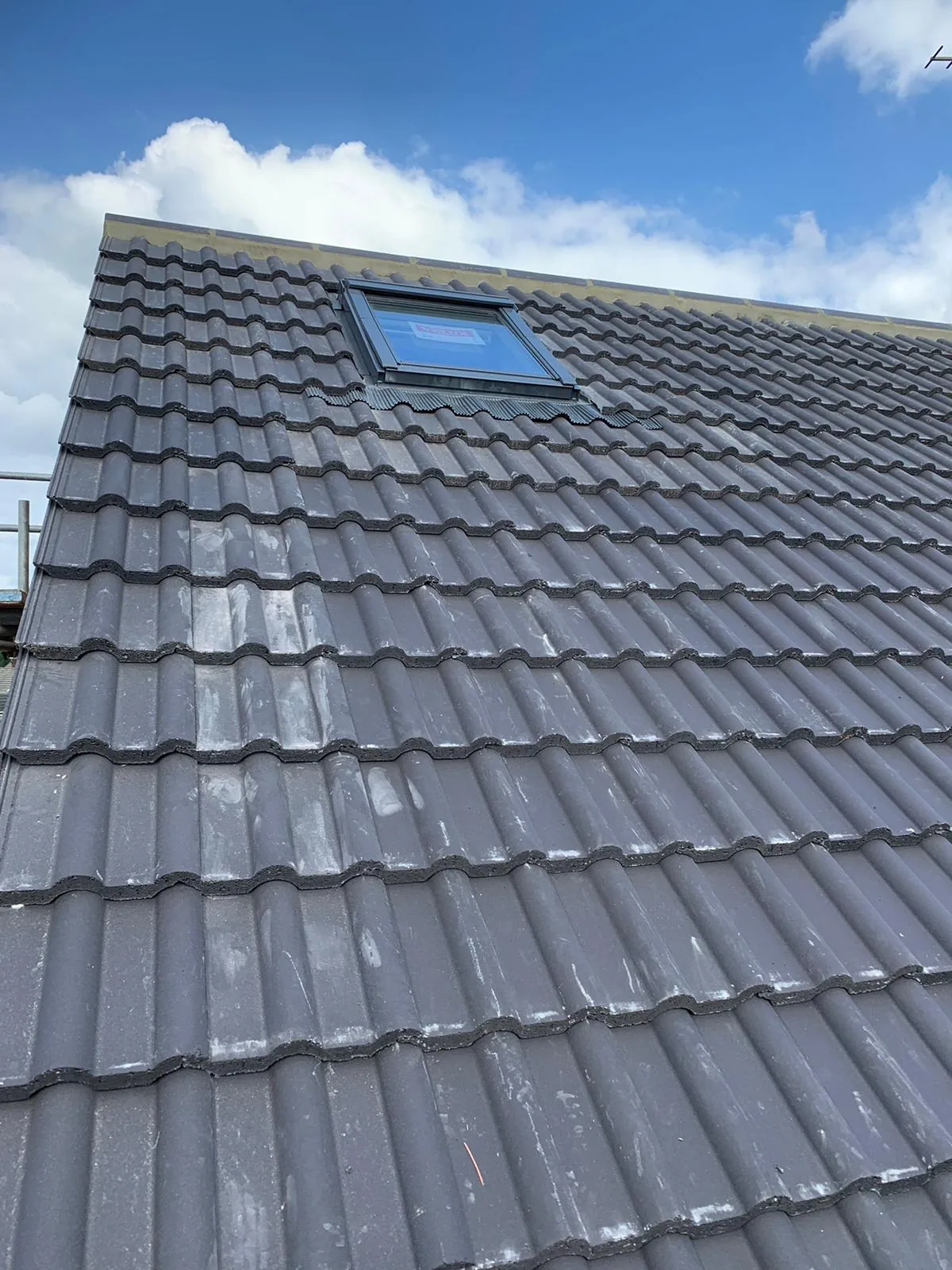
What pushes the price up or down: roof size and pitch, how much moss has built up, access difficulty, the number of chimneys or dormers to work around, and whether gutters need clearing as part of the job. These are general ranges, not a quote. A fixed price needs a survey.
Comparison Table: Roof Cleaning Methods
| Method | How It Works | Best For | Relative Cost | Typical Regrowth-Free Period |
|---|---|---|---|---|
| Soft Washing + Biocide | Low-pressure rinse with a moss and algae-killing chemical treatment | Concrete and clay tiled roofs, most Nottingham homes | ££ | 3-5 years |
| Hand Scraping + Biocide | Loose moss physically lifted off by hand, then biocide applied | Heavy, established moss build-up before a soft wash | ££ | 3-5 years (with treatment) |
| Pressure Washing | High-pressure jet strips growth from the surface | Hard surfaces like driveways, not recommended for tiled roofs | £ (lowest upfront) | 12-18 months, often less |
| Protective Roof Coating | A sealant applied after cleaning to slow future growth | Roofs with persistent regrowth, used with caution and only where genuinely warranted | £££ (highest) | Varies by product; treat claims with caution |
Why Choose Tate & Sons for Your Roof Clean
Tate & Sons was founded by James Tate on a simple idea: find out what's genuinely wrong, use the right materials, and leave something that holds for years, not months. That philosophy shapes how we handle roof cleaning too. We won't jet wash a roof to make it look good for six months when a proper soft wash would keep it clear for years, and we won't sell you a coating we can't stand behind. James still prices most jobs himself and is happiest working out how to treat a roof properly without cutting corners. Read more on our About page.
Our roofers are directly employed, not subcontracted. They hold NVQ Level 2 and 3 qualifications in Roofing Occupations and carry CSCS cards. Every roof clean starts with a free drone survey and every roofing repair we recommend alongside it comes with a 10-year workmanship guarantee.
Roof Cleaning Across Nottingham and the Wider County: Areas We Serve
We clean and treat roofs right across Greater Nottingham and out into the wider county. Wherever your property sits, our crews know the local tree cover, the housing stock, and the access.
- Nottingham City Centre (NG1)
- The Park (NG1)
- West Bridgford (NG2)
- Sneinton (NG2)
- Wollaton (NG8)
- Lenton (NG7)
- Beeston (NG9)
- Chilwell (NG9)
- Stapleford (NG9)
- Arnold (NG5)
- Sherwood (NG5)
- Mapperley (NG3)
- Carlton (NG4)
- Gedling (NG4)
- Hucknall (NG15)
- Long Eaton (NG10)
- Mansfield (NG18)
- Sutton-in-Ashfield (NG17)
Got Questions?
Your Flat Roofing Questions, Answered Properly
How much does roof cleaning cost in Nottingham?
Most Nottingham roof cleans cost £450-£750 for a standard semi-detached house, with bungalows from around £350 and larger detached homes running £650-£1,100 or more. Price depends on roof size, how much moss has built up, and access. A biocide treatment adds £150-£300 if it isn't already included. Scaffold or cherry picker access for a taller property adds a further £150-£400. A survey gives you an exact figure rather than an estimate.
Does my roof actually need cleaning, or is it just cosmetic?
Cleaning is usually cosmetic unless moss is thick enough to block gutters, valleys, or outlets, in which case it becomes a genuine drainage issue. A light covering of moss or algae on a shaded slope rarely causes structural harm on its own. The bigger risk is what's hiding underneath thick moss — trapped moisture and, occasionally, tiles that have already slipped. Our free drone survey tells you honestly which category your roof falls into before you spend a penny on cleaning.
What's the difference between soft washing and pressure washing?
Soft washing uses low water pressure, under 500 psi, combined with a biocide that kills moss and algae at the root. Pressure washing uses a concentrated high-pressure jet to blast growth off the surface without any chemical treatment. Soft washing is gentler on tiles and keeps moss away for three to five years. Pressure washing works faster but risks cracked tiles, water forced under laps, and moss regrowth within a year or two.
Can pressure washing damage my roof or void my warranty?
Yes, pressure washing is one of the most common causes of accidental tile damage during roof cleaning. The forceful jet can crack or dislodge tiles, strip protective coatings, and drive water into flashings and valleys it was never meant to reach. Many roofing warranties treat this kind of damage as misuse rather than a defect, so it can leave you without cover. Soft washing avoids nearly all of this risk, which is why it's the method we use on tiled and slated roofs.
How often should a roof be cleaned?
Most Nottingham roofs benefit from a check every one to two years and a full clean roughly every three to five years, depending on shade and tree cover. North-facing roofs and those under overhanging trees grow moss faster and may need attention more often. South-facing, more exposed roofs can often go longer between cleans. Our free drone survey tells you where your roof genuinely sits, rather than working to a fixed schedule.
Will the moss just come back after cleaning?
Moss can return, but how quickly depends entirely on the method used. A proper soft wash with biocide kills spores as well as visible growth, typically keeping a roof clear for three to five years. Pressure washing alone often leaves spores lodged in the tile texture, so moss can reappear within twelve to eighteen months. Shade, damp, and nearby trees all speed up regrowth regardless of method, which is why some roofs need more frequent attention than others.
Is it worth cleaning a roof before selling a house?
A clean roof improves kerb appeal and can reassure buyers that the property has been looked after, which matters at first viewing. It won't add significant value on its own, but a green, moss-heavy roof can prompt a buyer's surveyor to ask harder questions than necessary. Clearing gutters and treating visible moss beforehand removes an easy point of concern during a survey. It's a relatively small cost against the price of a delayed or renegotiated sale.
Does roof cleaning affect solar panels?
Solar panels need care during a roof clean, since biocide run-off and pressure can affect cell surfaces and seals if handled carelessly. We work around panels rather than over them, protecting cabling and mounting points, and we avoid harsh chemicals anywhere near the cells themselves. If your roof has panels fitted, tell us at survey stage so we can plan the clean around them. Panels generally don't need cleaning as often as the surrounding tiles, since rain naturally rinses most dust off a sloped panel surface.
Should listed or conservation area properties use a different cleaning method?
Older properties around The Park and parts of Lenton often have natural slate, softer historic tiles, or lime mortar that need gentler handling than standard concrete tile roofs. Aggressive biocides or high pressure can damage historic materials that a modern tile would shrug off. We assess material and condition on-site before deciding on a method, and we flag anything that might need conservation area consideration. Tell us your property's age and area when you book a survey, so we come prepared.
Book Your Free Drone Roof Survey Today
See exactly what your roof needs before any work starts. No ladders, no pressure — just a clear picture from a local Nottingham team.
A tired roof only gets worse as water works deeper into the deck and timber beneath it. A quick, free drone survey today tells you exactly where you stand — and often the fix is smaller and cheaper than you feared. Book now, get an honest quote, and protect your home before the next East Midlands downpour finds the weak spot.
📍 57 Cyril Avenue, Nottingham, NG8 5BA
📞 0115 647 4455
Call the Nottingham team today on 0115 647 4455, or request your free drone survey online. We’re already working across your area.
Get in Touch
Tate & Sons Roofing — Nottingham
57 Cyril Avenue, Nottingham, NG8 5BA
📞 0115 647 4455
✉️ [email protected]